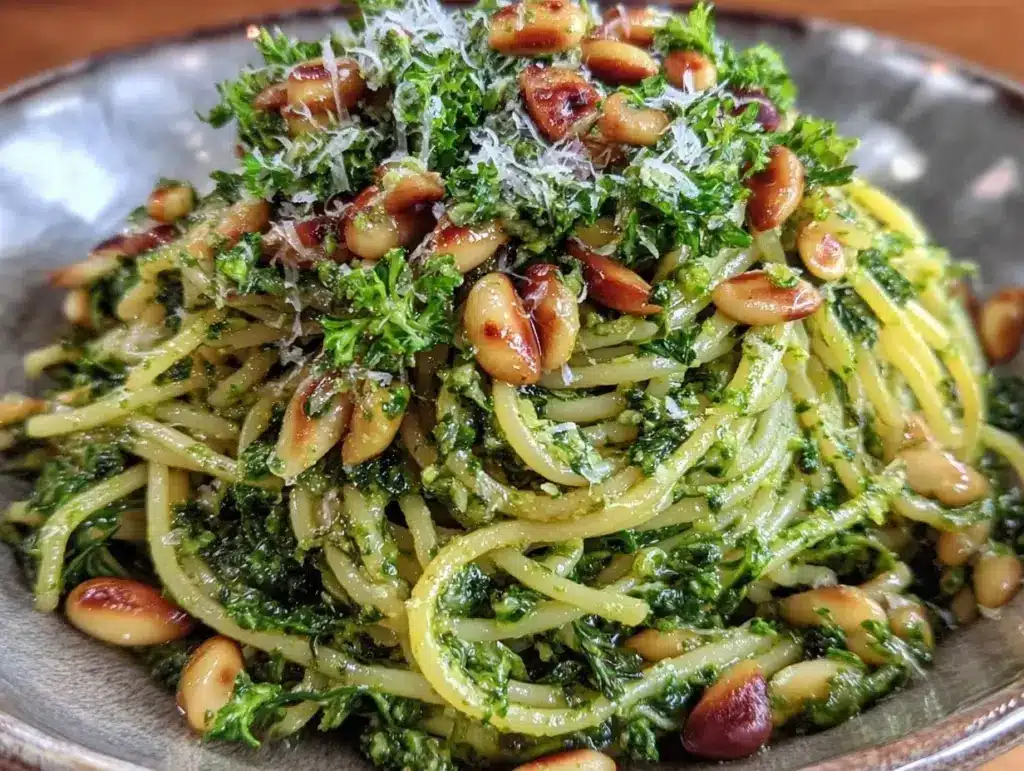
“You won’t believe where I stumbled upon this recipe,” my neighbor chuckled one sunny Saturday morning as we shared coffee on the porch. It was her quiet little secret, passed down by a friend who swore by wild greens. I was skeptical at first—dandelion greens? Seriously? But the way she described the vibrant, slightly bitter leaves transforming into a creamy pesto had my curiosity piqued. That afternoon, with a cracked mixing bowl in hand and a little mess on the counter (because, hey, pesto making isn’t always neat!), I set out to try this fresh dandelion greens pesto pasta with crunchy pine nuts. Honestly, the first bite took me by surprise. The peppery notes of the greens paired with the nutty crunch felt like a fresh breeze in my kitchen. Maybe you’ve been there—stuck in a dinner rut, craving something fresh yet comforting. This recipe stuck with me because it’s simple, yet feels special. Plus, it’s a little wild, a little unexpected, and totally delicious.”
Why You’ll Love This Recipe
Having tested this fresh dandelion greens pesto pasta recipe more times than I can count, I can say it’s become a kitchen staple for good reasons. Here’s what makes it stand out:
- Quick & Easy: Ready in under 30 minutes, perfect when you want a fresh meal without the fuss.
- Simple Ingredients: Uses everyday pantry staples plus foraged dandelion greens, so no last-minute grocery runs.
- Perfect for Spring & Summer: When dandelion greens are at their peak, this dish truly shines.
- Crowd-Pleaser: The crunchy pine nuts add a texture contrast that delights both kids and adults.
- Unbelievably Delicious: The earthy bitterness of dandelion greens balances beautifully with garlic, lemon, and rich olive oil.
What sets this recipe apart is the way it transforms a humble, often overlooked green into pesto that sings with flavor. I’ve tried blending the greens alone or mixing with basil, but pure dandelion pesto has this bold, fresh character you won’t find anywhere else. It’s comfort food with a wild twist—healthy, vibrant, and, honestly, a little addictive. Whether you’re impressing guests or just treating yourself on a quiet night, this pasta makes every bite memorable.
What Ingredients You Will Need
This recipe relies on simple, wholesome ingredients to deliver bold flavor and satisfying texture without any fuss. Most are pantry staples, but the star is, of course, fresh dandelion greens—ideally young and tender from spring harvests.
- Dandelion greens, about 4 cups packed (roughly 120g), washed and trimmed (choose young leaves for less bitterness)
- Garlic cloves, 2 large, peeled (adds pungent aroma and depth)
- Pine nuts, ½ cup (70g), lightly toasted for that toasty crunch—look for fresh, not rancid
- Parmesan cheese, ½ cup (50g), finely grated (for umami richness; use vegetarian-friendly if preferred)
- Extra-virgin olive oil, ⅓ cup (80ml), cold-pressed for best flavor
- Lemon juice, from ½ fresh lemon (brightens and balances the bitterness)
- Salt, to taste (preferably sea salt or kosher salt)
- Black pepper, freshly ground, to taste
- Spaghetti or your favorite pasta, about 12 ounces (340g)
Optional: A handful of fresh basil or parsley can be added for a milder herbaceous twist. For a vegan version, swap Parmesan for nutritional yeast or vegan cheese alternatives. If dandelion greens are hard to find, young kale or arugula make decent substitutes, though the flavor won’t be quite as wild and distinctive.
Equipment Needed
- Food processor or high-speed blender: Essential for making the pesto silky and smooth. I’ve used both; a food processor offers more control over texture.
- Large pot: For boiling pasta; a heavy-bottomed pot helps maintain even heat.
- Skillet or small pan: To toast the pine nuts gently without burning them.
- Fine grater or microplane: For grating Parmesan cheese evenly.
- Colander or strainer: To drain pasta efficiently.
- Wooden spoon or tongs: For stirring and mixing pasta with pesto.
If you don’t have a food processor, a sturdy blender works but may need pulsing and scraping more often. Toast pine nuts on medium-low heat to avoid bitterness—trust me, I’ve scorched a batch or two learning this the hard way. Budget-friendly tip: pine nuts can be pricey; sunflower seeds or chopped walnuts offer a wallet-friendly alternative, though the flavor will shift.
Preparation Method
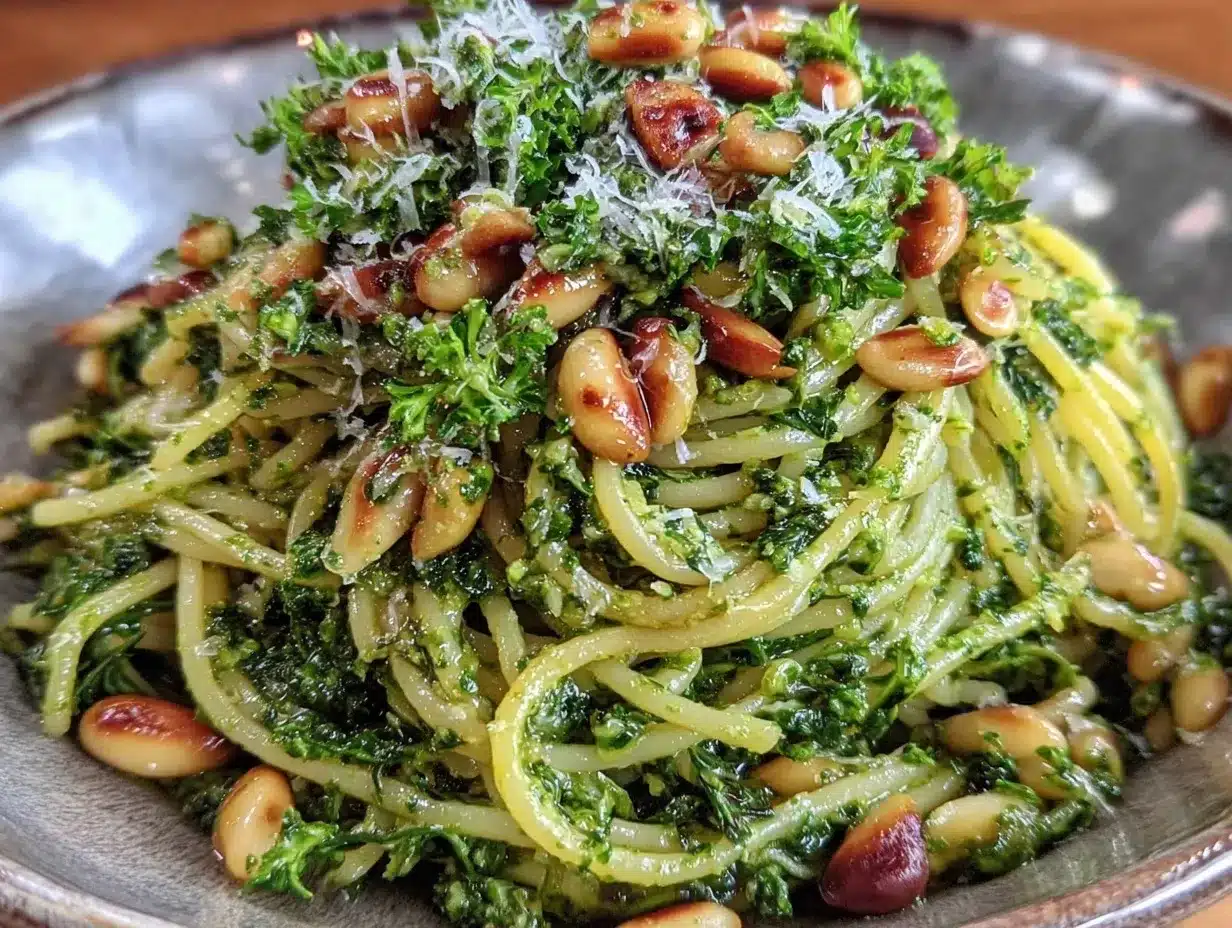
- Prepare the dandelion greens: Rinse thoroughly under cold water to remove grit. Pat dry with a clean kitchen towel or use a salad spinner. Trim any tough stems. This step usually takes about 5 minutes.
- Toast the pine nuts: Heat a dry skillet over medium-low heat. Add pine nuts and stir frequently for 3-5 minutes until golden and fragrant. Watch closely—they can burn quickly! Remove from heat and set aside.
- Cook the pasta: Bring a large pot of salted water to a boil. Add 12 ounces (340g) of spaghetti and cook according to package instructions until al dente (typically 8-10 minutes). Reserve about ½ cup (120ml) of pasta cooking water before draining.
- Make the pesto: In a food processor, combine dandelion greens, garlic cloves, toasted pine nuts (reserve a tablespoon for garnish), and Parmesan cheese. Pulse a few times to chop the ingredients roughly.
- Add olive oil and lemon juice: With the processor running, slowly drizzle in ⅓ cup (80ml) of olive oil and the juice of half a lemon. Blend until smooth but still with a bit of texture. If the pesto is too thick, add a splash of reserved pasta water to loosen it.
- Season: Taste and season with salt and freshly ground black pepper. Give it a final quick pulse to mix.
- Toss pasta with pesto: Return drained pasta to the pot or a large bowl. Add the pesto and toss well until every strand is coated. If it seems dry, add a little more reserved pasta water, one tablespoon at a time.
- Serve: Plate the pasta, sprinkle with reserved pine nuts, and an extra dusting of Parmesan if you like. Fresh lemon zest on top adds a lovely brightness.
Tip: Don’t rinse your pasta after draining—that starchy coating helps the pesto cling better. Also, avoid over-pulsing pesto; you want a bit of texture to keep it interesting, not a completely smooth paste.
Cooking Tips & Techniques
When making this fresh dandelion greens pesto pasta, some little things really make a difference. For one, picking young dandelion leaves is key. Older leaves can get bitter and tough, which sometimes turns off people new to wild greens.
Toasting pine nuts is worth the effort—it brings out their natural oils and adds a satisfying crunch. Just keep your eyes on them; I’ve learned the hard way that a second too long on the heat means bitter pine nuts that can ruin the whole dish.
When blending pesto, start slow. Adding olive oil gradually lets you control the texture. If you’re unsure, pause and scrape down the sides of your processor bowl so everything mixes evenly.
Finally, saving some pasta water is an old pasta trick that really pays off. The starchiness helps bind the pesto sauce to the noodles, making every bite luscious rather than dry. If you’re multitasking, start the pesto while pasta cooks to keep things moving smoothly in the kitchen.
Variations & Adaptations
- Vegan version: Swap Parmesan for nutritional yeast or vegan cheese. Use a bit more lemon juice to brighten flavors.
- Mixed greens pesto: Combine dandelion greens with basil or spinach to mellow out the bitterness.
- Nut swap: Use walnuts or almonds instead of pine nuts for a different crunch and flavor profile.
- Gluten-free option: Substitute pasta with gluten-free varieties or spiralized zucchini noodles for a low-carb twist.
- Spicy kick: Add a pinch of red pepper flakes to the pesto for some heat.
I once tried adding a handful of fresh mint to the pesto—unexpected, but it gave the dish a refreshing lift that surprised my dinner guests.
Serving & Storage Suggestions
This fresh dandelion greens pesto pasta is best served warm right after tossing, but it also holds up well at room temperature for casual meals or picnics. Garnish with extra pine nuts or a lemon wedge for guests to squeeze over.
Pair it with a crisp white wine or sparkling water with lemon to complement the herbaceous flavors. A simple green salad or roasted vegetables round out the meal nicely.
Store leftovers in an airtight container in the refrigerator for up to 2 days. The pesto will continue to infuse the pasta with flavor overnight, making it even tastier the next day. To reheat, gently warm on the stove with a splash of water to loosen the sauce, or enjoy cold as a pasta salad.
Nutritional Information & Benefits
One serving of this fresh dandelion greens pesto pasta (about 1.5 cups) provides roughly:
- Calories: 420-450 kcal
- Protein: 15-18g
- Fat: 22-25g (mostly healthy fats from olive oil and pine nuts)
- Carbohydrates: 40-45g
- Fiber: 4-5g
Dandelion greens are a powerhouse of vitamins A, C, and K, plus antioxidants and minerals like iron and calcium. The healthy fats from olive oil and pine nuts support heart health, while garlic adds natural immune-boosting benefits. This dish fits well into vegetarian diets and can be adapted for gluten-free or vegan needs easily.
Conclusion
So, if you’re looking for a fresh take on pesto pasta that’s a little wild and wonderfully flavorful, this fresh dandelion greens pesto pasta with crunchy pine nuts is calling your name. It’s a recipe that brings simple ingredients together with a bit of creative flair—perfect for those evenings when you want something quick but satisfying.
Feel free to tweak the flavors to suit your palate—add more lemon, swap nuts, or toss in extra herbs. I love this recipe because it connects me with the season, the outdoors, and that satisfying crunch that makes every bite exciting. Give it a try and let me know how it turns out—your feedback and twists on this dish always brighten my day!
FAQs
Can I use store-bought dandelion greens for this recipe?
Absolutely! Just make sure they’re fresh and young. If they’re older or wilted, the pesto might taste more bitter.
How do I store leftover pesto?
Store pesto in an airtight container with a thin layer of olive oil on top to prevent browning. It keeps well in the fridge for up to 3 days or can be frozen for longer storage.
What if I don’t have pine nuts?
Walnuts, almonds, or sunflower seeds make good substitutes. Toast them lightly to bring out their flavor.
Is this recipe suitable for a vegan diet?
Yes! Simply replace Parmesan with nutritional yeast or a vegan cheese alternative.
Can I make the pesto ahead of time?
Yes, you can prepare the pesto a day in advance. Just store it in the fridge with a bit of olive oil on top and bring it to room temperature before mixing with pasta.
Pin This Recipe!
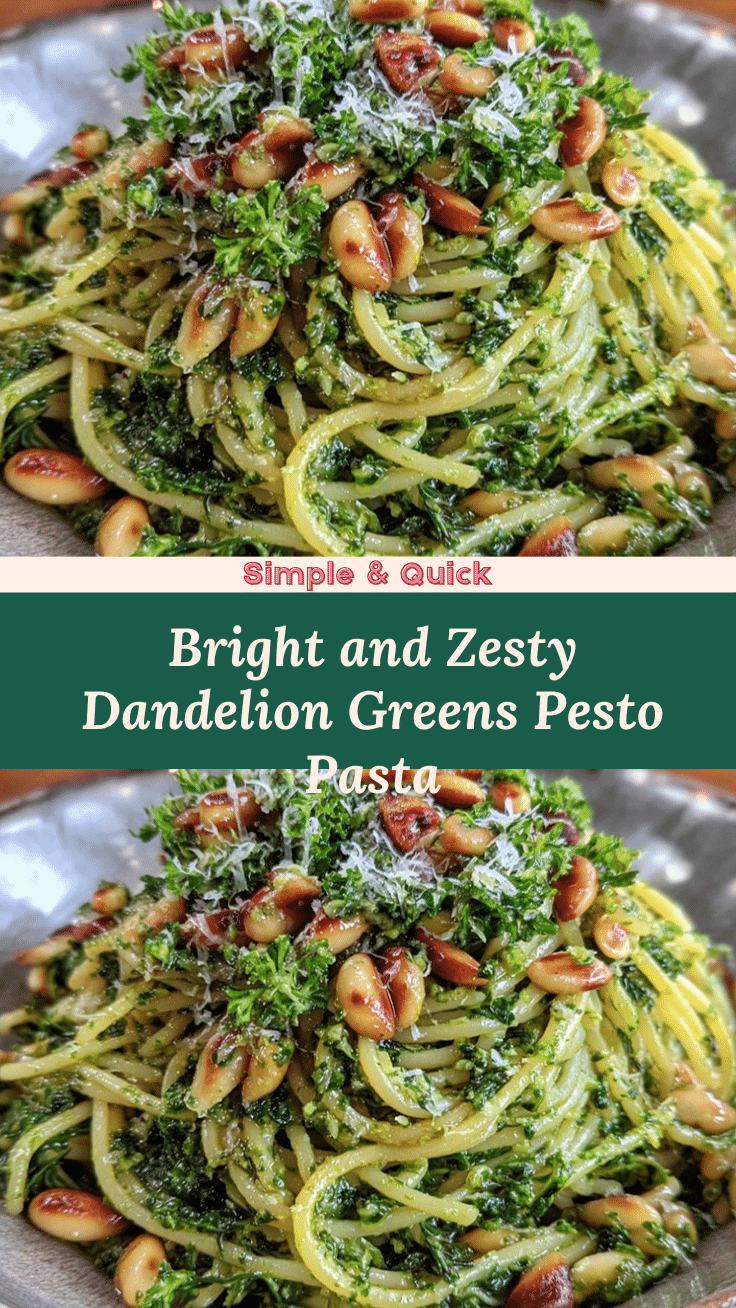
Fresh Dandelion Greens Pesto Pasta Recipe Easy Homemade with Crunchy Pine Nuts
A quick and easy pasta recipe featuring fresh dandelion greens transformed into a creamy pesto with crunchy pine nuts, perfect for spring and summer meals.
- Prep Time: 10 minutes
- Cook Time: 15 minutes
- Total Time: 25 minutes
- Yield: 4 servings 1x
- Category: Main Course
- Cuisine: Italian-inspired
Ingredients
- 4 cups packed fresh dandelion greens (about 120g), washed and trimmed
- 2 large garlic cloves, peeled
- ½ cup pine nuts (70g), lightly toasted
- ½ cup Parmesan cheese (50g), finely grated
- ⅓ cup extra-virgin olive oil (80ml)
- Juice of ½ fresh lemon
- Salt, to taste
- Freshly ground black pepper, to taste
- 12 ounces spaghetti or your favorite pasta (340g)
Instructions
- Rinse dandelion greens thoroughly under cold water to remove grit. Pat dry and trim any tough stems (about 5 minutes).
- Toast pine nuts in a dry skillet over medium-low heat, stirring frequently for 3-5 minutes until golden and fragrant. Remove from heat and set aside.
- Bring a large pot of salted water to a boil. Cook spaghetti according to package instructions until al dente (8-10 minutes). Reserve ½ cup pasta cooking water before draining.
- In a food processor, combine dandelion greens, garlic cloves, toasted pine nuts (reserve 1 tablespoon for garnish), and Parmesan cheese. Pulse a few times to chop roughly.
- With the processor running, slowly drizzle in olive oil and lemon juice. Blend until smooth but still textured. Add reserved pasta water if pesto is too thick.
- Season pesto with salt and freshly ground black pepper. Pulse briefly to mix.
- Return drained pasta to pot or large bowl. Add pesto and toss until every strand is coated. Add more reserved pasta water if needed to loosen sauce.
- Serve pasta plated, sprinkled with reserved pine nuts and extra Parmesan if desired. Optionally garnish with fresh lemon zest.
Notes
Pick young dandelion leaves to avoid bitterness. Toast pine nuts carefully on medium-low heat to prevent burning. Do not over-pulse pesto; keep some texture. Save pasta water to loosen pesto sauce and help it cling to noodles. For vegan version, replace Parmesan with nutritional yeast or vegan cheese. Pine nuts can be substituted with walnuts, almonds, or sunflower seeds.
Nutrition
- Serving Size: About 1.5 cups per s
- Calories: 435
- Sugar: 2
- Sodium: 350
- Fat: 23.5
- Saturated Fat: 3.5
- Carbohydrates: 42.5
- Fiber: 4.5
- Protein: 16.5
Keywords: dandelion greens, pesto, pasta, pine nuts, homemade, easy recipe, vegetarian, spring recipe, wild greens