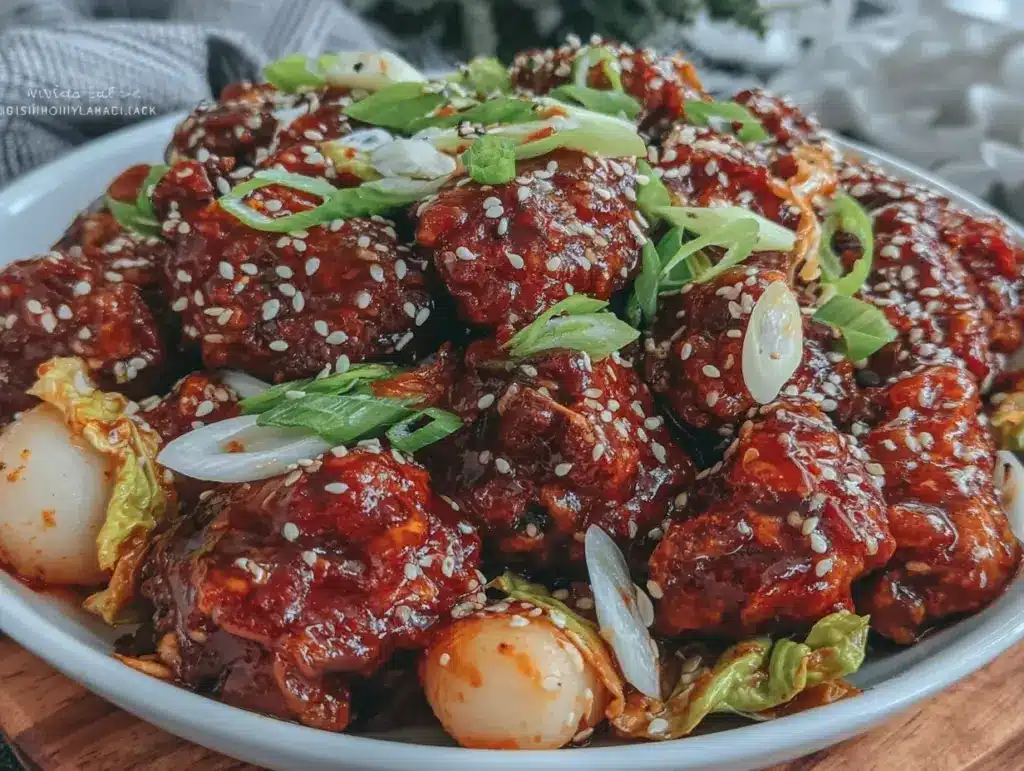
“You know that moment when you’re just about to give up on dinner ideas, and then a spicy, saucy skillet comes to the rescue? That’s exactly what happened one chilly Thursday evening when I stumbled upon this flavorful Dakgalbi recipe. Honestly, I wasn’t expecting much — I mean, stir-fry chicken isn’t exactly rare in my kitchen. But as I started tossing the chicken and rice cakes with that fiery, sweet sauce, the whole kitchen filled with this incredible aroma that pulled me right in.
It all began when my friend Minseo, who I’d always thought was just quietly brilliant at math, casually mentioned her grandmother’s Dakgalbi during a Zoom chat. Next thing I knew, I was hunting down gochujang paste and chewy rice cakes at my local Asian market, despite the clock ticking past 7 PM. (I even forgot to set the timer for the rice cake soaking, but more on that later.)
What got me hooked was how the cabbage softened perfectly, soaking up the spicy-sweet sauce, and those chewy rice cakes—oh, those rice cakes!—gave the dish a satisfying texture that I hadn’t expected. It’s not just another spicy chicken stir-fry; it’s a heartwarming blend of textures and flavors that somehow feels like a cozy meal and a little party all at once. So, if you’re craving a dish that’s bold, a bit daring, and downright comforting, this Dakgalbi recipe might just become your new go-to.
Why You’ll Love This Recipe
Let me tell you, this Dakgalbi recipe stands out because it’s been tested and tweaked through many late-night cooking sessions and curious weekend experiments. I’ve made it for friends who usually shy away from spicy food, and even they came back for seconds. Here’s why it’s a keeper:
- Quick & Easy: Ready in under 40 minutes, making it perfect for busy weeknights or when you want something flavorful without fuss.
- Simple Ingredients: You likely have most of these in your pantry or can find them easily at an Asian grocery store.
- Perfect for Sharing: Whether it’s a casual dinner or a small get-together, Dakgalbi’s bold flavors make it a crowd-pleaser.
- Unbelievably Delicious: The balance of spicy, sweet, and savory with chewy rice cakes and tender chicken is honestly next level.
- Unique Texture Play: The cabbage adds crunch while the rice cake provides chewiness, making every bite interesting.
This isn’t just any spicy stir-fry chicken — it’s the kind that you close your eyes for a second and savor, like a little edible celebration. Plus, it’s flexible enough to tweak for milder palates or extra heat. Trust me, once you get this down, it’s going to be the recipe you reach for when you want something with a bit of kick and a whole lot of comfort.
What Ingredients You Will Need
This Dakgalbi recipe uses straightforward, wholesome ingredients to create a bold flavor and satisfying texture without complicated steps. Most are pantry staples or easy to find at local stores.
- Chicken thighs, boneless and skinless, cut into bite-sized pieces (dark meat works best for tenderness)
- Korean rice cakes (tteokbokki rice cakes), soaked in warm water for 10-15 minutes to soften
- Cabbage, roughly chopped (preferably Napa or green cabbage for crunch and sweetness)
- Gochujang (Korean red chili paste) – key for that signature spicy-sweet flavor (I recommend Chung Jung One brand for authentic taste)
- Gochugaru (Korean chili flakes), optional for extra heat
- Soy sauce, preferably low sodium for balance
- Sugar or honey to add a touch of sweetness
- Garlic, minced (adds depth and aroma)
- Ginger, freshly grated (brightens the sauce)
- Sesame oil, toasted, for finishing
- Green onions, sliced, for garnish and freshness
- Vegetable oil or neutral oil for stir-frying
- Optional add-ins: Carrot slices, sweet potato chunks, or rice cakes for variation
For substitutions, you can swap chicken thighs with breasts if you prefer leaner meat, though the texture will be slightly different. If you can’t find Korean rice cakes, thickly sliced mochi or gnocchi can work in a pinch, but the chew won’t be quite the same. For a gluten-free version, make sure your soy sauce is tamari or another gluten-free brand.
Equipment Needed
- Large non-stick skillet or cast-iron pan: Essential for even cooking and getting that slight char on the chicken and rice cakes. I prefer cast iron because it holds heat well, but a heavy skillet works fine.
- Mixing bowls: For marinating the chicken and soaking rice cakes.
- Sharp knife and cutting board: For prepping vegetables and chicken.
- Wooden spoon or silicone spatula: To stir without scratching your pan.
- Measuring spoons and cups: For accuracy in sauce ingredients.
- Optional: Tongs for turning chicken pieces easily.
If you don’t have a cast iron pan, a large wok or sturdy skillet works just fine. Just make sure it’s big enough to hold all ingredients comfortably for easy stirring. Keeping your pan well-seasoned will help with sticking and flavor over time.
Preparation Method
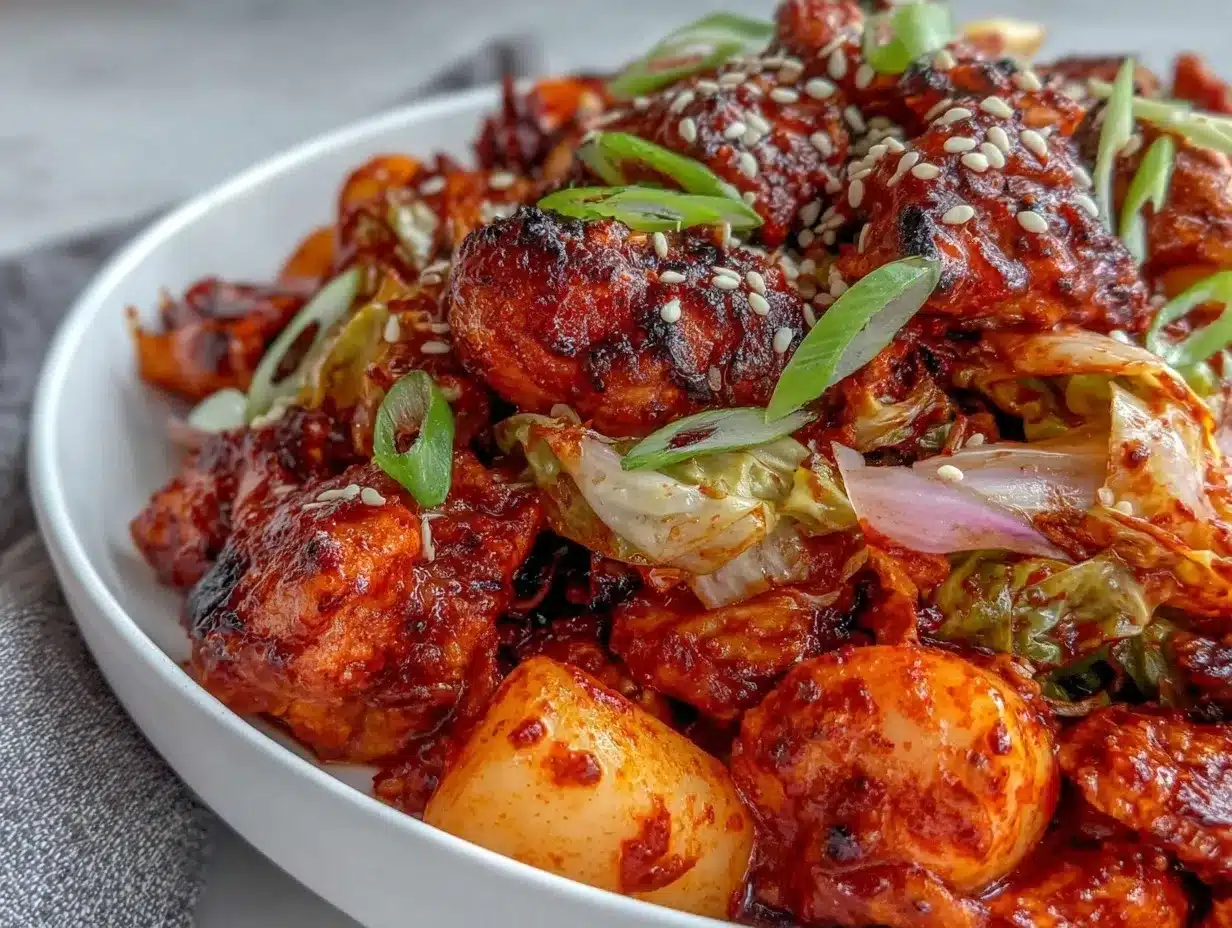
- Prepare the rice cakes: Soak the Korean rice cakes in warm water for 10-15 minutes to soften. If they’re fresh, a quick rinse is enough. Drain and set aside.
- Marinate the chicken: In a medium bowl, mix 2 tablespoons gochujang, 1 tablespoon soy sauce, 1 teaspoon sugar or honey, minced garlic (2 cloves), and grated ginger (1 teaspoon). Add the chicken pieces and toss well to coat. Let it marinate for at least 20 minutes. (If you’re short on time, even 10 minutes will do.)
- Prep vegetables: While the chicken marinates, chop about 2 cups of cabbage into bite-sized pieces and slice green onions for garnish.
- Heat your pan: Add 1 tablespoon vegetable oil over medium-high heat. Once hot (you’ll see a shimmer), add the marinated chicken pieces without crowding them. Let them sear for 3-4 minutes undisturbed to get a nice caramelized surface.
- Add rice cakes and cabbage: Toss in the soaked rice cakes and cabbage with the chicken. Stir to combine.
- Make the sauce: In a small bowl, combine 1 tablespoon gochujang, 1 teaspoon soy sauce, and a pinch of gochugaru if you want extra heat. Pour it over the stir-fry and mix well to coat everything evenly.
- Cook together: Reduce heat to medium and cook for another 7-10 minutes, stirring occasionally. The sauce should thicken and sticky-coat the chicken and rice cakes. Cabbage will soften but still retain a slight crunch.
- Finish with sesame oil: Drizzle 1 teaspoon toasted sesame oil and toss once more to add that nutty aroma.
- Garnish and serve: Sprinkle sliced green onions on top and serve immediately. If you like, serve with steamed rice or a simple leafy salad on the side.
Pro tip: If the sauce gets too thick or starts sticking, splash in a tablespoon of water to loosen it up. Also, watch the rice cakes carefully—they can get too soft if overcooked. The perfect texture is chewy but tender.
Cooking Tips & Techniques
Getting the texture and balance of flavors right in Dakgalbi is all about timing and attention. Here are some tips I picked up after a few trial runs (and a few too many burnt bits!):
- Don’t skip soaking the rice cakes: Even a short soak hydrates them just enough to cook evenly without turning into chewy bullets.
- Marinate chicken adequately: The gochujang-based marinade tenderizes the meat and infuses that signature spicy-sweet flavor. If you have time, marinate longer (up to a couple of hours) for deeper flavor.
- High heat sear first: Searing the chicken pieces before adding everything else locks in juices and creates a caramelized crust, which adds complexity to the dish.
- Keep stirring but don’t overdo it: You want the sauce to thicken and cling to ingredients, so let it sit a bit before stirring again.
- Use toasted sesame oil at the end: It’s delicate and loses aroma if cooked too long, so always add it last.
- Adjust heat carefully: Gochujang varies in spiciness by brand. Taste a little before adding more chili flakes.
- Multitasking: While the chicken marinates and rice cakes soak, chop veggies and prep your garnish. It saves precious time.
Honestly, the first time I made this, I nearly burned the sauce because I got distracted by a phone call. But the forgiving nature of this recipe means a quick stir and a splash of water saved the day. You’ll get the hang of it quickly, and it’s worth every spicy, saucy bite.
Variations & Adaptations
This Dakgalbi recipe is super flexible and can be tailored to your taste or dietary needs. Here are a few ideas I’ve tried or recommend:
- Vegetarian version: Swap chicken for firm tofu or mushrooms like king oyster or shiitake. Increase the marinade time slightly for tofu to soak up flavors.
- Extra veggies: Add thinly sliced sweet potatoes, carrots, or bell peppers for more color and nutrition.
- Milder spice: Use less gochujang and skip the gochugaru flakes. Add a bit more sugar or honey to balance the flavors.
- Low-carb adaptation: Omit rice cakes and add extra cabbage or zucchini noodles for a lighter dish.
- Seafood twist: Substitute shrimp or squid for chicken for a tasty surf-and-turf feel.
My personal favorite variation is adding a handful of mozzarella cheese on top during the last minute of cooking—yes, it’s not traditional, but that gooey, melty cheese mixed with the spicy sauce is pure comfort heaven.
Serving & Storage Suggestions
Serve this Dakgalbi sizzling hot straight from the pan. The vibrant red sauce, tender chicken, and chewy rice cakes look so inviting when garnished with fresh green onions. Pair it with steamed jasmine rice or a simple cucumber salad to cool down the spice.
Leftovers store well, too. Let the dish cool completely before transferring to an airtight container. It keeps in the fridge for up to 3 days. When reheating, add a splash of water and gently warm on the stove or microwave to prevent sticking and dryness.
Freezing is possible but may alter the texture of the rice cakes, which can become a bit tougher after thawing. I usually recommend enjoying fresh or refrigerated leftovers instead.
Flavors tend to deepen after a day, so if you can wait, the next-day Dakgalbi is often even better. Just make sure to reheat gently to keep that perfect chew on the rice cakes.
Nutritional Information & Benefits
This Dakgalbi recipe offers a balanced mix of protein, carbs, and fiber, providing sustained energy and satisfying comfort without feeling heavy. Chicken thighs provide juicy protein and essential nutrients like B vitamins and zinc.
Cabbage adds fiber and vitamin C, supporting digestion and immune health. The fermented gochujang paste contains probiotics and antioxidants, contributing to gut health and metabolism.
While spicy, this dish is free from refined flours and excessive oils, making it a wholesome meal option. For those watching sodium intake, use low-sodium soy sauce and adjust salt accordingly.
Gluten-free eaters can enjoy this by choosing gluten-free soy sauce and verifying the gochujang brand, as some contain wheat. This recipe is naturally dairy-free unless you add cheese as a variation.
Conclusion
So there you have it—this flavorful Dakgalbi spicy Korean stir-fry chicken with rice cake and cabbage is a dependable recipe that brings bold taste and comforting textures to your table. It’s perfect for anyone who loves a little heat and a lot of heart in their meals.
Feel free to tweak the spice level or ingredient mix to make it truly yours. I love this recipe because it’s simple enough for a weeknight but impressive enough to share with friends. Plus, it’s one of those dishes that seems to get better every time you make it.
If you try this Dakgalbi recipe, I’d love to hear how it turns out and any creative spins you add. Don’t hesitate to leave a comment or share your photos—I’m always excited to see your kitchen adventures!
Happy cooking and enjoy the spicy, satisfying journey!
FAQs
What are the best rice cakes to use for Dakgalbi?
The traditional choice is Korean tteokbokki rice cakes, which are cylindrical and chewy. Soaking them in warm water before cooking softens them perfectly. Avoid pre-packaged or frozen rice cakes without soaking, as they can be too hard.
Can I make Dakgalbi less spicy?
Absolutely! Reduce the amount of gochujang and skip adding chili flakes. You can also add a bit more sugar or honey to balance the heat without losing the signature flavor.
Is Dakgalbi gluten-free?
It can be if you use gluten-free soy sauce (like tamari) and check the gochujang label, as some brands contain wheat. Always read ingredient labels carefully if gluten is a concern.
How do I store leftover Dakgalbi?
Store in an airtight container in the refrigerator for up to 3 days. Reheat gently on the stove or microwave with a splash of water to keep rice cakes soft and sauce loose.
Can I use chicken breast instead of thighs?
You can, but chicken thighs are preferred for their juiciness and tenderness. Breast meat can dry out more quickly during cooking, so watch your cooking time closely if you swap.
Pin This Recipe!
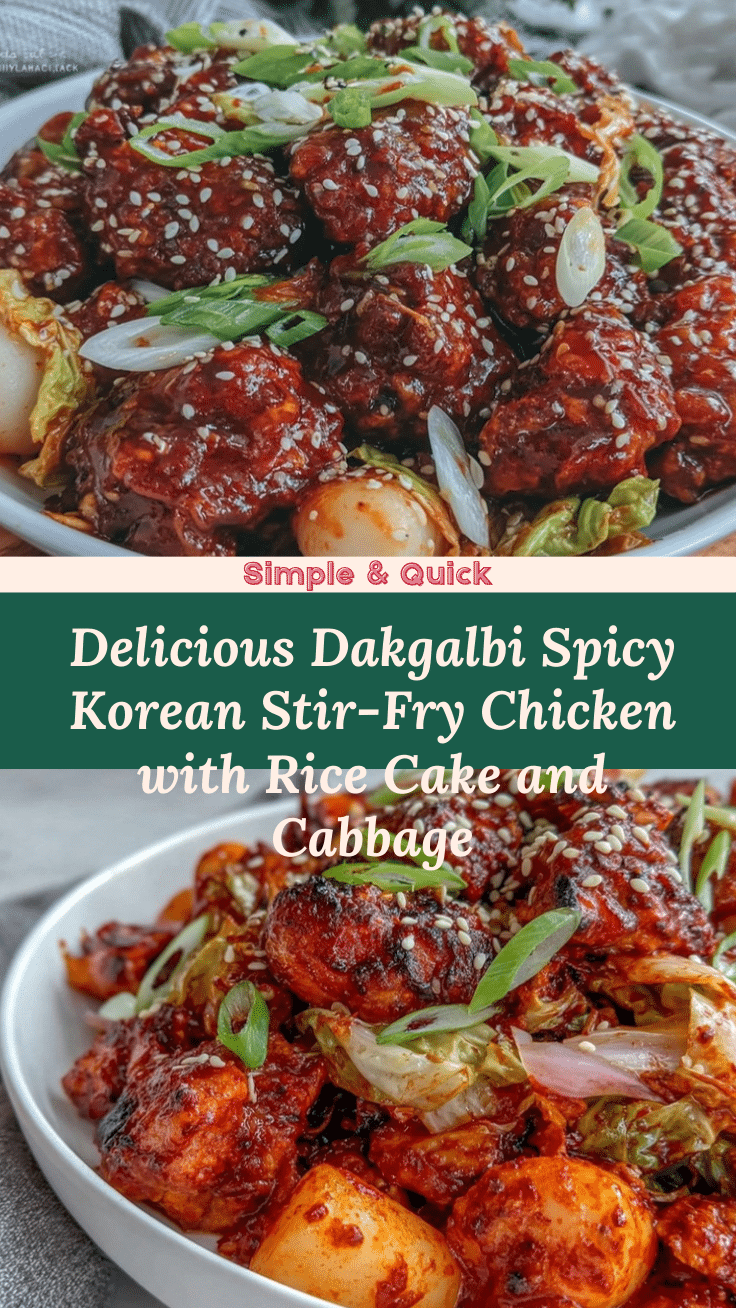
Dakgalbi Recipe Easy Spicy Korean Stir-Fry Chicken with Rice Cake
A bold and comforting spicy Korean stir-fry featuring tender chicken thighs, chewy rice cakes, and crunchy cabbage in a spicy-sweet gochujang sauce. Perfect for quick weeknight dinners or sharing with friends.
- Prep Time: 15 minutes
- Cook Time: 20 minutes
- Total Time: 35 minutes
- Yield: 4 servings 1x
- Category: Main Course
- Cuisine: Korean
Ingredients
- 1 lb boneless, skinless chicken thighs, cut into bite-sized pieces
- 8 oz Korean rice cakes (tteokbokki rice cakes), soaked in warm water for 10-15 minutes
- 2 cups Napa or green cabbage, roughly chopped
- 3 tablespoons gochujang (Korean red chili paste)
- 1 teaspoon gochugaru (Korean chili flakes), optional
- 2 tablespoons low sodium soy sauce
- 1 teaspoon sugar or honey
- 2 cloves garlic, minced
- 1 teaspoon freshly grated ginger
- 1 tablespoon toasted sesame oil
- 2 green onions, sliced, for garnish
- 1 tablespoon vegetable oil or neutral oil for stir-frying
- Optional add-ins: carrot slices, sweet potato chunks, or extra rice cakes
Instructions
- Soak the Korean rice cakes in warm water for 10-15 minutes to soften. Drain and set aside.
- In a medium bowl, mix 2 tablespoons gochujang, 1 tablespoon soy sauce, 1 teaspoon sugar or honey, minced garlic, and grated ginger. Add chicken pieces and toss to coat. Marinate for at least 20 minutes (minimum 10 minutes if short on time).
- Chop cabbage into bite-sized pieces and slice green onions for garnish.
- Heat 1 tablespoon vegetable oil in a large non-stick skillet or cast-iron pan over medium-high heat until shimmering.
- Add marinated chicken pieces without crowding. Sear undisturbed for 3-4 minutes to caramelize.
- Add soaked rice cakes and chopped cabbage to the pan. Stir to combine.
- In a small bowl, mix 1 tablespoon gochujang, 1 teaspoon soy sauce, and a pinch of gochugaru if using. Pour over the stir-fry and mix well.
- Reduce heat to medium and cook for 7-10 minutes, stirring occasionally, until sauce thickens and coats ingredients. Cabbage should soften but remain slightly crunchy.
- Drizzle toasted sesame oil over the dish and toss once more.
- Garnish with sliced green onions and serve immediately with steamed rice or a simple salad.
Notes
Soak rice cakes to soften before cooking to avoid hard texture. Marinate chicken for at least 20 minutes for best flavor. Add sesame oil at the end to preserve aroma. If sauce thickens too much, add a splash of water. Watch rice cakes carefully to keep chewy but tender texture. Use low sodium soy sauce to control saltiness. For less spice, reduce gochujang and omit gochugaru.
Nutrition
- Serving Size: 1 serving (approxima
- Calories: 350
- Sugar: 6
- Sodium: 600
- Fat: 15
- Saturated Fat: 2.5
- Carbohydrates: 25
- Fiber: 3
- Protein: 28
Keywords: Dakgalbi, Korean chicken stir-fry, spicy chicken, rice cakes, gochujang, Korean recipe, easy dinner, weeknight meal