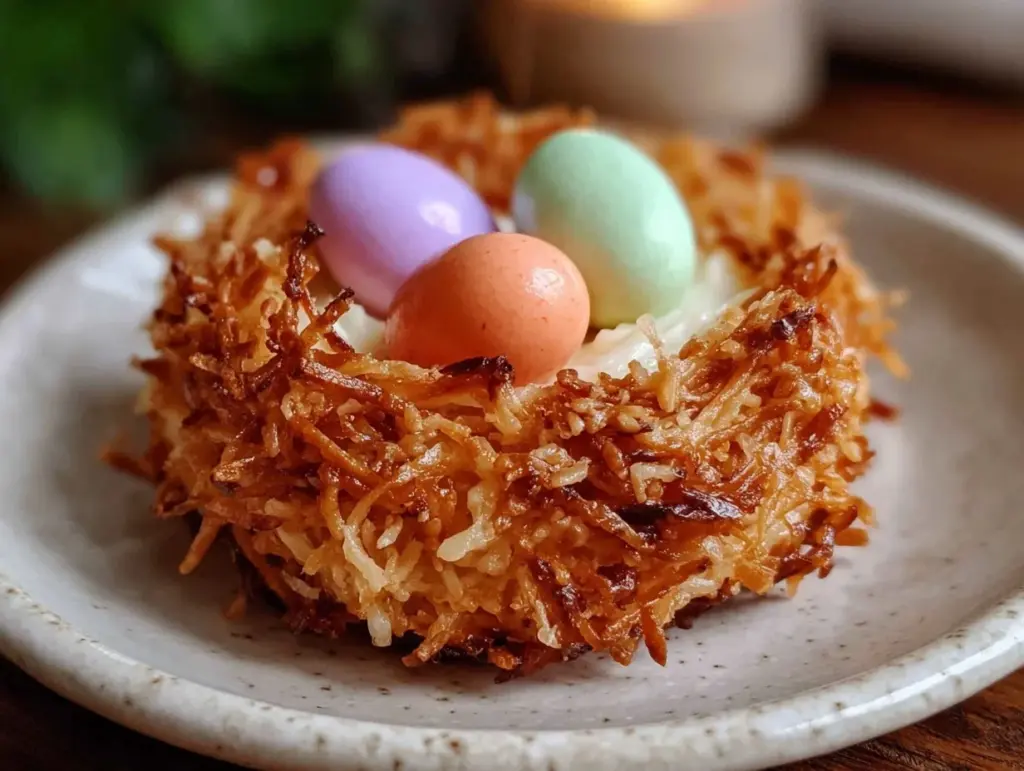
“I never thought a simple cake could steal the show at our Easter brunch until that Sunday morning when I stumbled into making this creamy coconut nest cake,” I confess. It all started when I realized I’d forgotten to buy the usual dessert the night before. Instead of panicking, I grabbed some coconut flakes, canned coconut milk, and a handful of colorful candy eggs that were hiding in the pantry from last year’s Easter basket. Honestly, the kitchen looked like a tiny hurricane hit it—flour on the counter, eggshell bits in the sink, and me juggling three bowls at once. But the moment I took that first bite, I knew something special had happened.
Maybe you’ve been there—scrambling to put together a dessert that’s both festive and fuss-free. This creamy coconut nest cake is exactly that kind of recipe. It’s got that light, fluffy texture from the coconut cake base, paired with a luscious coconut cream that’s just the right balance of sweet and smooth. And those candy eggs? They’re the playful finishing touch that makes it pop visually and bring that nostalgic Easter charm to your table.
What’s funny is how this cake became a tradition in our house. I was never really into coconut desserts before, but this recipe changed my mind entirely. The texture of the cake is soft but sturdy enough to hold the creamy coconut topping, while the toasted coconut flakes add that irresistible crunch. Plus, the candy eggs nestled on top remind me of childhood egg hunts and sunny spring afternoons. I keep making it year after year because it’s not just a dessert, it’s a little celebration on a plate. So, if you’re looking to impress without stressing, this coconut nest cake might just be your new go-to Easter treat.
Why You’ll Love This Creamy Coconut Nest Cake Recipe
After testing this recipe multiple times—yes, I’ve tasted my way through a few batches—you get a sense of what makes it stand out from the crowd. Here’s why this creamy coconut nest cake with candy eggs should be your next Easter dessert choice:
- Quick & Easy: Ready in under 90 minutes, perfect for those last-minute Easter plans or when you want a dessert that doesn’t eat up your whole day.
- Simple Ingredients: No exotic items here. Most are pantry staples, like shredded coconut, eggs, and basic baking essentials you likely have on hand.
- Perfect for Easter: The candy eggs on top bring that seasonal vibe that kids and adults adore alike.
- Crowd-Pleaser: Family, friends, and even picky eaters have given this cake rave reviews—something about the creamy coconut flavor combined with that little candy crunch.
- Unbelievably Delicious: The cake’s moist crumb, paired with the silky coconut cream and toasted flakes, balances texture and flavor in a way that surprises every time.
What really sets this recipe apart is the homemade coconut cream layer, which is gently whipped to a smooth, airy richness—no heavy or greasy feel here. I’ve tweaked the original version to bring out a cleaner coconut flavor, using full-fat canned coconut milk and a touch of vanilla. Plus, the candy eggs aren’t just decoration; they add a burst of sweetness and a fun surprise that makes everyone smile. Honestly, it’s the kind of dessert that brings back warm memories and creates new ones, all while being simple enough to whip up in your home kitchen.
What Ingredients You Will Need
This recipe uses simple, wholesome ingredients to deliver bold flavor and satisfying texture without the fuss. Most are easy to find year-round, and you can even swap a few to fit your pantry or dietary needs.
- For the Coconut Cake Base:
- All-purpose flour – 1 ½ cups (190 g), sifted for lightness
- Baking powder – 1 ½ teaspoons, to give the cake a gentle rise
- Salt – ¼ teaspoon, to balance sweetness
- Unsalted butter – ½ cup (115 g), softened (I recommend using Land O’Lakes for best texture)
- Granulated sugar – 1 cup (200 g)
- Large eggs – 3, room temperature (helps with fluffiness)
- Vanilla extract – 1 teaspoon, pure for aroma
- Unsweetened shredded coconut – ¾ cup (60 g), adds texture and that coconut punch
- Whole milk – ½ cup (120 ml), for moisture
- For the Coconut Cream Topping:
- Full-fat canned coconut milk – 1 can (13.5 oz / 400 ml), chilled overnight (this helps the cream separate)
- Powdered sugar – ¼ cup (30 g), sifted to avoid lumps
- Vanilla extract – ½ teaspoon
- Toasted shredded coconut – ½ cup (40 g), for garnish and crunch
- For Decoration:
- Candy-coated chocolate eggs – 1 cup (about 150 g), assorted colors (think pastel Easter vibes)
Ingredient Tips: Look for small-curd shredded coconut rather than the chunky flakes for the cake batter so the texture stays soft. For the canned coconut milk, I swear by Thai Kitchen brand; it separates perfectly when chilled and whips into a luscious cream. If you prefer dairy-free, swap whole milk with almond milk, and it still works beautifully. For a gluten-free version, try substituting all-purpose flour with a 1:1 gluten-free baking flour blend.
Equipment Needed
- 9-inch (23 cm) round cake pan – a standard size that bakes the cake evenly.
- Mixing bowls – at least two, for batter and cream.
- Electric mixer or stand mixer – essential for whipping the coconut cream to fluffy perfection.
- Measuring cups and spoons – for accurate ingredient portions.
- Spatula – for folding ingredients gently and spreading the cream topping.
- Cooling rack – to cool the cake completely before frosting.
- Optional: parchment paper – to line the cake pan for easier removal.
If you don’t have an electric mixer, a sturdy whisk will do for whipping the coconut cream, but it’ll take a bit longer and more elbow grease. I once tried it manually during a power outage and, let me tell you, it was a workout! For budget-friendly options, basic hand mixers work fine and are easier to clean than stand mixers.
Preparation Method
- Preheat the oven to 350°F (175°C). Grease your 9-inch cake pan and optionally line the bottom with parchment paper for easy removal. This step takes about 10 minutes, so get your ingredients ready meanwhile.
- Mix dry ingredients: In a medium bowl, whisk together 1 ½ cups (190 g) all-purpose flour, 1 ½ teaspoons baking powder, and ¼ teaspoon salt. Set aside. This ensures even distribution of leavening agents.
- Cream butter and sugar: In a large bowl, beat ½ cup (115 g) softened unsalted butter and 1 cup (200 g) granulated sugar on medium speed for 3-4 minutes until light and fluffy. The texture should look pale and smooth—don’t rush this step or your cake might turn dense.
- Add eggs and vanilla: Beat in 3 large eggs, one at a time, making sure each is fully incorporated before adding the next. Stir in 1 teaspoon vanilla extract. If the mixture looks curdled, don’t worry—that’s normal before the flour goes in.
- Combine dry and wet: Alternately add the dry flour mixture and ½ cup (120 ml) whole milk to the butter mixture, starting and ending with flour. Mix gently on low speed just until combined to avoid overmixing (which can make the cake tough).
- Fold in shredded coconut: Gently fold in ¾ cup (60 g) unsweetened shredded coconut using a spatula. The batter should be thick but pourable.
- Bake the cake: Pour batter into the prepared pan and smooth the top. Bake for 30-35 minutes or until a toothpick inserted in the center comes out clean. You’ll know it’s done when the edges pull slightly away from the pan and the surface springs back lightly when touched.
- Cool completely: Let the cake cool in the pan for 15 minutes, then turn out onto a cooling rack. This usually takes about 30 minutes total, but patience is key to avoid soggy topping later.
- Prepare the coconut cream: Open the chilled can of coconut milk carefully. Scoop out the solidified cream into a bowl, leaving the liquid behind (save it for smoothies!). Using an electric mixer, whip the cream with ¼ cup (30 g) powdered sugar and ½ teaspoon vanilla until fluffy and smooth—about 3-5 minutes. If it’s too soft, pop it in the fridge for 10 minutes to firm up.
- Assemble the cake: Spread the whipped coconut cream evenly over the cooled cake. Sprinkle ½ cup (40 g) toasted shredded coconut on top for texture and extra coconut flavor.
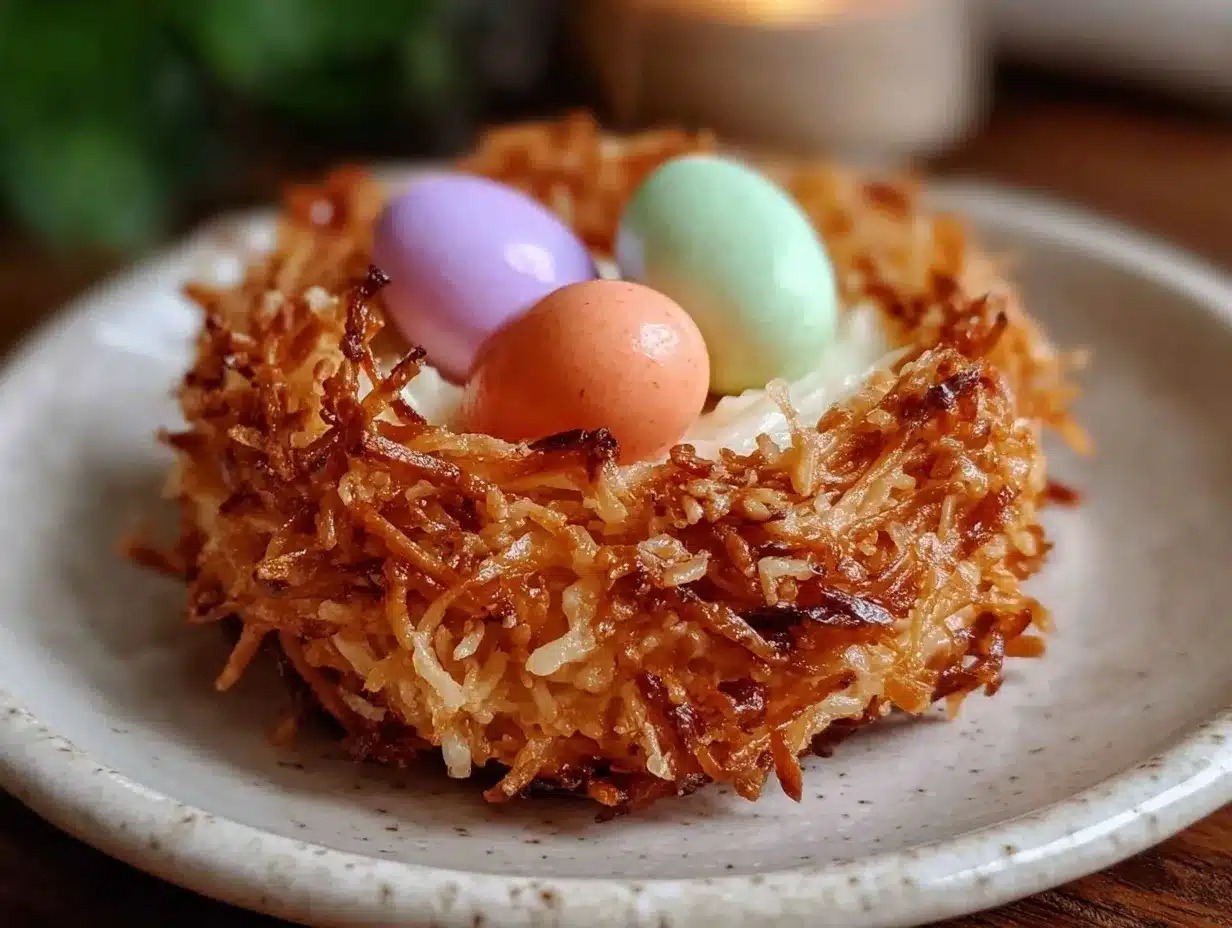
- Add candy eggs: Nestle 1 cup (about 150 g) of candy-coated chocolate eggs on the top, arranging them like a colorful Easter nest. Press lightly so they stick but don’t sink into the cream.
- Chill before serving: Refrigerate the cake for at least 1 hour to set the cream. This step is crucial for the cream to hold its shape and for flavors to meld.
Pro tip: When toasting coconut flakes, keep a close eye—they can burn in seconds. I learned this the hard way on my first try. Use a dry pan over medium heat and stir constantly until golden brown, then immediately transfer to a plate to cool.
Cooking Tips & Techniques for Success
Making this creamy coconut nest cake is straightforward, but a few tricks make all the difference. Here’s what I’ve learned from some trial and oh-so-many errors:
- Don’t rush the butter and sugar creaming: The fluffier your butter and sugar, the lighter the cake crumb. It’s tempting to speed through this, but patience here pays off in texture.
- Egg temperature matters: Using room-temp eggs helps them blend better into the batter, preventing curdling and giving a more uniform rise.
- Be gentle mixing wet and dry: Overmixing after adding flour can make the cake dense and chewy. Stop mixing as soon as you see no more flour streaks.
- Chill the coconut milk overnight: This separation step is key for that rich whipped coconut cream. Skip it, and you’ll end up with more liquid and less cream.
- Toasting coconut: Use medium heat and stir constantly. Burnt coconut tastes bitter and will spoil the cake’s flavor.
- Refrigerate assembled cake: The cream topping can get runny if served warm. Let it chill to firm up and for flavors to settle.
- Timing multitasking: While the cake bakes and cools, whip the coconut cream and toast the flakes. This way, nothing gets cold or rushed.
Honestly, the first time I tried to whip coconut cream without chilling the can, I ended up with a soupy mess. You know that feeling when you want to give up but decide to try one more time? That’s the moment this cake came together perfectly for me. So, stick with the process—each step adds up to the perfect creamy coconut nest.
Variations & Adaptations for Different Tastes
This creamy coconut nest cake is flexible and forgiving, so you can make adjustments based on dietary needs or flavor preferences.
- Gluten-Free Version: Swap all-purpose flour for a 1:1 gluten-free baking flour blend. The texture remains moist, though slightly denser.
- Vegan Adaptation: Use flax eggs (1 tablespoon ground flaxseed + 3 tablespoons water per egg) and replace butter with coconut oil. Make sure to use a vegan sugar and dairy-free milk like almond or oat milk.
- Flavor Twists: Add a teaspoon of almond extract alongside vanilla for a nutty note. Or fold in ½ cup (75 g) of crushed pineapple for a tropical burst.
- Alternative Toppings: Instead of candy eggs, decorate with fresh berries or toasted nuts for a less sweet, more natural look.
- Cooking Methods: This cake bakes beautifully in a bundt pan or even as cupcakes—reduce baking time to 20-25 minutes for cupcakes.
One time, I swapped candy eggs for mini marshmallows at a kid’s party, and it was a huge hit—melty, gooey bites nestled in creamy coconut heaven. Feel free to get creative with what you have or what your guests prefer!
Serving & Storage Suggestions
Serve this creamy coconut nest cake chilled or at room temperature. The coconut cream tastes best when cool but not cold enough to mute the flavor. For presentation, place it on a pastel-colored cake stand or plate to match the Easter theme and add fresh mint leaves or edible flowers around the edges for a festive touch.
Pair it with a light, fruity beverage like iced tea with lemon or sparkling water infused with mint and lime. If you want to add a brunch element, serve alongside a fresh fruit salad or citrusy yogurt parfaits.
Storage is simple: cover the cake loosely with plastic wrap and refrigerate. It stays fresh for up to 3 days. The longer it sits, the more the flavors meld, but the coconut flakes on top may lose some crunch. To re-crisp, lightly toast extra coconut flakes and sprinkle before serving again.
For freezing, wrap the cake tightly in plastic wrap and place in an airtight container. Thaw overnight in the fridge and refresh the topping by whipping a bit more coconut cream if needed. Just remember, candy eggs may discolor slightly after freezing, so add fresh ones before serving.
Nutritional Information & Benefits
One slice (based on 12 servings) of this creamy coconut nest cake contains approximately:
| Calories | 280 kcal |
|---|---|
| Fat | 15 g (mostly from healthy coconut fat) |
| Carbohydrates | 32 g |
| Protein | 3 g |
| Fiber | 2 g |
Coconut provides medium-chain triglycerides (MCTs), which some studies link to improved energy metabolism. The unsweetened shredded coconut adds fiber, while the cake base offers a modest protein amount from eggs and milk. This dessert is not low-carb or sugar-free, so enjoy it as a special treat. For those with nut allergies, this recipe is safe as it contains no tree nuts.
Personally, I appreciate how this dessert brings a touch of indulgence without feeling heavy or overly rich. It’s a reminder that comfort food can be satisfying and light at the same time.
Conclusion
This creamy coconut nest cake with candy eggs is one of those recipes that sneaks up on you—simple ingredients, easy steps, and a final result that feels festive and special. It’s perfect if you want an Easter dessert that looks stunning but doesn’t require a day in the kitchen. Plus, it’s flexible enough to suit different diets and tastes.
I love this cake because it combines nostalgic Easter charm with a fresh, creamy coconut flavor that’s unlike anything else on the table. It’s a recipe that’s become a favorite in my home, and I hope it finds a place in yours too. If you give it a try, I’d love to hear how you made it your own—maybe you have a fun variation or a special occasion twist!
Don’t be shy—leave a comment below, share your photos, or ask questions. Let’s keep the Easter baking fun going, one creamy coconut nest cake at a time!
FAQs About Creamy Coconut Nest Cake
Can I make this cake ahead of time?
Yes! Bake the cake and prepare the coconut cream a day in advance. Assemble the cake and refrigerate overnight for best flavor and texture.
What if I can’t find canned coconut milk?
You can substitute with heavy cream or whipping cream, but the flavor won’t be quite as coconut-forward. For a non-dairy option, try full-fat coconut cream from a health food store.
How do I prevent the candy eggs from sinking into the cream?
Make sure the whipped coconut cream is chilled and firm before decorating. Gently press the candy eggs on top without pushing too hard.
Can I use sweetened shredded coconut instead of unsweetened?
Yes, but reduce the sugar in the cake batter by about 2 tablespoons to avoid it becoming too sweet.
Is this recipe suitable for kids?
Absolutely! The creamy texture and colorful candy eggs make it a kid-friendly dessert. Just watch out for allergies related to coconut or eggs.
Pin This Recipe!
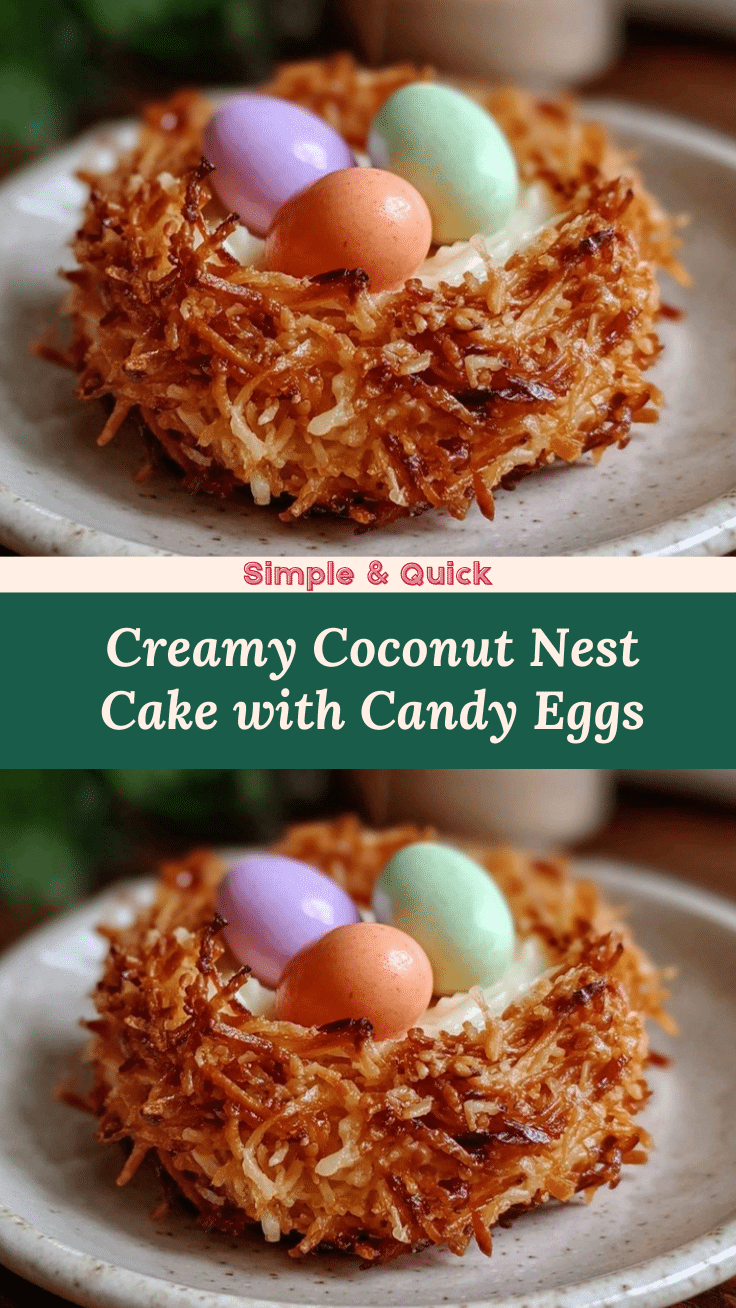
Creamy Coconut Nest Cake

A light and fluffy coconut cake topped with whipped coconut cream and colorful candy eggs, perfect for Easter celebrations. This easy homemade dessert combines moist coconut flavor with a playful festive touch.
- Prep Time: 20 minutes
- Cook Time: 35 minutes
- Total Time: 1 hour 55 minutes
- Yield: 12 servings 1x
- Category: Dessert
- Cuisine: American
Ingredients
- 1 ½ cups (190 g) all-purpose flour, sifted
- 1 ½ teaspoons baking powder
- ¼ teaspoon salt
- ½ cup (115 g) unsalted butter, softened
- 1 cup (200 g) granulated sugar
- 3 large eggs, room temperature
- 1 teaspoon vanilla extract
- ¾ cup (60 g) unsweetened shredded coconut
- ½ cup (120 ml) whole milk
- 1 can (13.5 oz / 400 ml) full-fat canned coconut milk, chilled overnight
- ¼ cup (30 g) powdered sugar
- ½ teaspoon vanilla extract
- ½ cup (40 g) toasted shredded coconut
- 1 cup (about 150 g) candy-coated chocolate eggs
Instructions
- Preheat the oven to 350°F (175°C). Grease a 9-inch cake pan and optionally line the bottom with parchment paper.
- In a medium bowl, whisk together the flour, baking powder, and salt. Set aside.
- In a large bowl, beat the softened butter and granulated sugar on medium speed for 3-4 minutes until light and fluffy.
- Beat in the eggs one at a time, fully incorporating each before adding the next. Stir in 1 teaspoon vanilla extract.
- Alternately add the dry flour mixture and whole milk to the butter mixture, starting and ending with flour. Mix gently on low speed just until combined.
- Fold in the unsweetened shredded coconut gently with a spatula.
- Pour the batter into the prepared pan and smooth the top. Bake for 30-35 minutes or until a toothpick inserted in the center comes out clean.
- Let the cake cool in the pan for 15 minutes, then turn out onto a cooling rack to cool completely.
- Open the chilled coconut milk can and scoop out the solidified cream into a bowl, leaving the liquid behind.
- Whip the coconut cream with powdered sugar and ½ teaspoon vanilla extract using an electric mixer until fluffy and smooth, about 3-5 minutes. Chill if too soft.
- Spread the whipped coconut cream evenly over the cooled cake.
- Sprinkle toasted shredded coconut on top for garnish.
- Nestle the candy-coated chocolate eggs on top, pressing lightly to stick but not sink.
- Refrigerate the assembled cake for at least 1 hour before serving.
Notes
Use small-curd shredded coconut for a softer cake texture. Chill canned coconut milk overnight for best cream separation. Toast coconut flakes carefully over medium heat, stirring constantly to avoid burning. Refrigerate the cake to set the cream and meld flavors. For gluten-free, substitute flour with a 1:1 gluten-free baking blend. For vegan, use flax eggs, coconut oil, vegan sugar, and dairy-free milk.
Nutrition
- Serving Size: 1 slice (1/12 of cak
- Calories: 280
- Fat: 15
- Carbohydrates: 32
- Fiber: 2
- Protein: 3
Keywords: coconut cake, Easter dessert, creamy coconut, candy eggs, easy cake recipe, homemade dessert, festive cake