“You wouldn’t believe it,” my neighbor Joe said one sunny Saturday morning, waving a jar of something mysterious as I mowed the lawn. It was a batch of pickled fiddlehead ferns he’d whipped up the night before. Honestly, I had no clue what fiddleheads even were until then, but the way Joe talked about his discovery — fresh from the woods behind his place, mixed with garlic and dill — made me curious enough to try. Maybe you’ve been there, skeptical about quirky ingredients but willing to give them a shot because, well, why not?
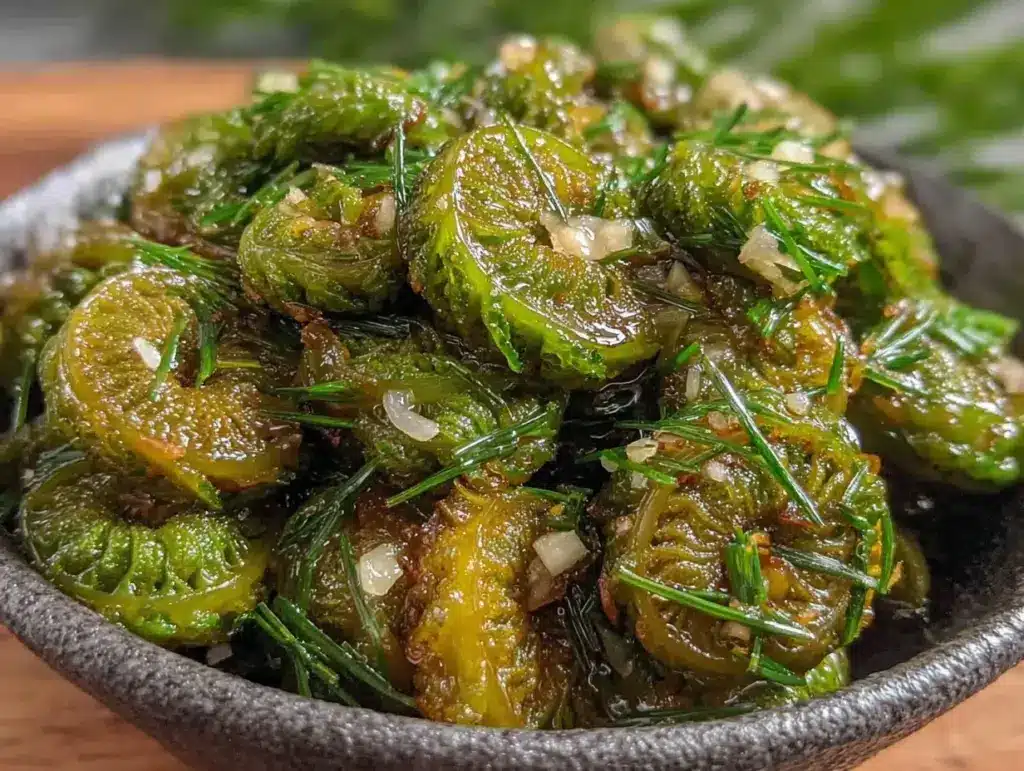
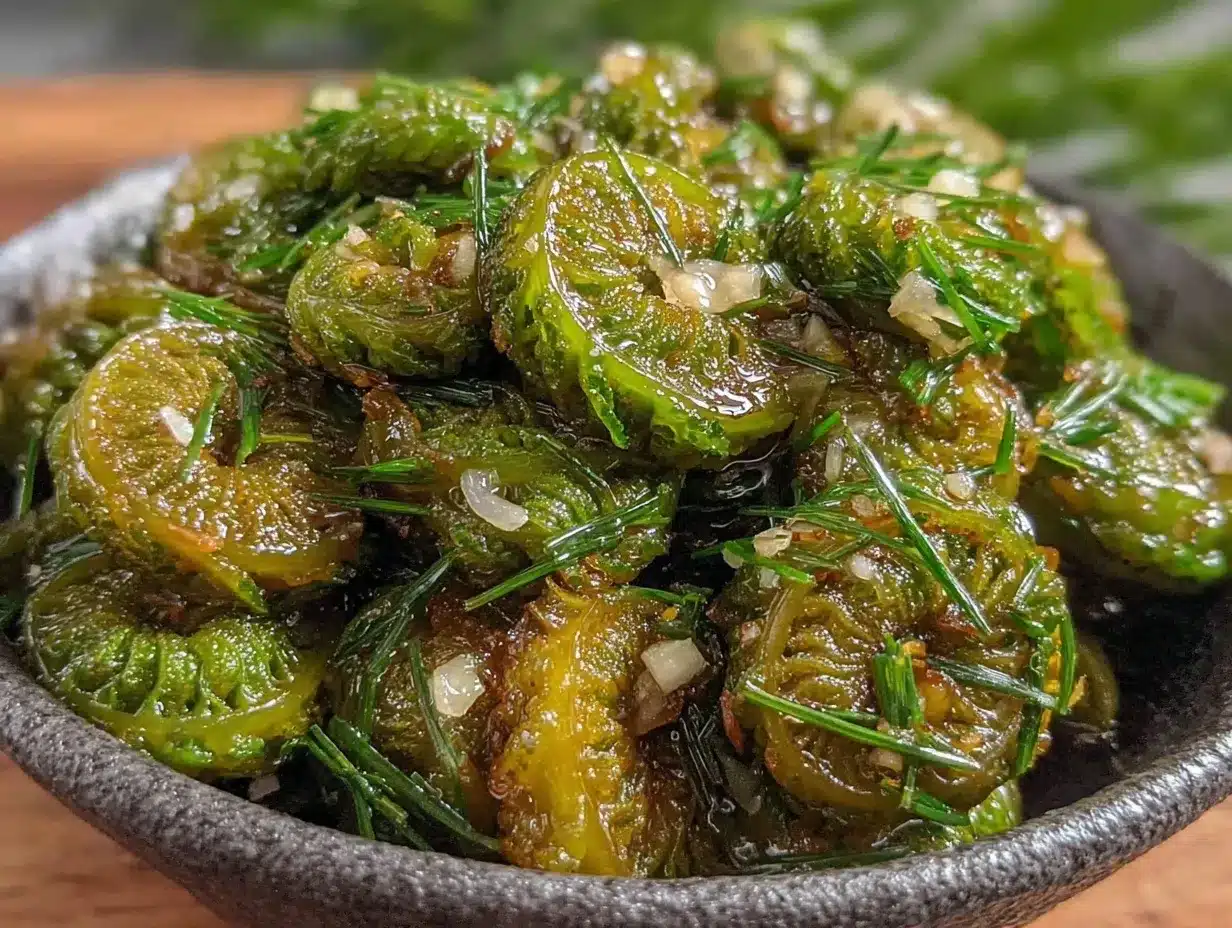
The moment I tasted those tangy, garlicky fiddleheads, I was hooked. They weren’t just pickled veggies; they were little bundles of forest flavor with a crunch and a bite that made every snack or salad pop. I remember juggling the jar with one hand while trying to jot down Joe’s recipe on a scrap of paper (which, yes, I almost lost when the dog ran off with it). This recipe stuck with me because it’s surprisingly simple yet delivers this punch of freshness and zest you didn’t know you were missing.
Pickled fiddlehead ferns with garlic and dill might sound like a niche treat, but once you try them, they quickly become your go-to for an interesting snack or a bright addition to your meals. Plus, the process is fun, and the result is something you can proudly say you made yourself — no fancy equipment or hard-to-find ingredients required. Let me tell you, the subtle earthiness of fiddleheads paired with the pungent garlic and fragrant dill is an unbeatable combo that I keep coming back to every spring.
Why You’ll Love This Recipe
After several rounds of trial and error (including a few too-sour batches and one where I forgot the garlic entirely—oops!), I landed on this flavorful pickled fiddlehead ferns recipe with garlic and dill that’s truly a keeper. Here’s why it’s a must-try:
- Quick & Easy: From start to finish, this recipe takes under an hour, so you can have homemade pickles ready to enjoy without a full day in the kitchen.
- Simple Ingredients: No need for obscure spices or specialty stores—all you need is fiddleheads, garlic, dill, vinegar, and a few pantry staples.
- Perfect for Spring: Fiddleheads are a seasonal treasure, and pickling them lets you savor their unique flavor long after the season ends.
- Crowd-Pleaser: These pickled fiddleheads have wowed friends and family during potlucks and casual dinners alike. They’re crunchy, tangy, and packed with flavor.
- Unbelievably Delicious: The balance of tart vinegar, aromatic dill, and punchy garlic lifts the earthiness of fiddleheads into a snack or side dish that’s downright addictive.
This recipe isn’t just another pickle variation. The secret lies in blanched fiddleheads that keep their snap, combined with the right amount of garlic and fresh dill to create a harmonious flavor profile. You’ll notice the difference compared to store-bought pickles or other fiddlehead preparations—this one’s about bright, fresh notes and a satisfying crunch every time.
What Ingredients You Will Need
This recipe uses simple, wholesome ingredients to bring out the best in fiddlehead ferns without overwhelming their natural charm. Most of these are pantry staples, so you probably have everything on hand already.
- Fresh fiddlehead ferns – about 1 pound (450 grams), cleaned and trimmed (look for tightly coiled, bright green fiddleheads without brown spots)
- Garlic cloves – 4 to 5, peeled and lightly crushed (adds pungent aroma and depth)
- Fresh dill – 3 to 4 sprigs (for that classic, herby flavor)
- White vinegar – 1 cup (240 ml) (you can substitute with apple cider vinegar for a milder tang)
- Water – 1 cup (240 ml) (to balance the acidity)
- Sea salt – 1 tablespoon (15 grams), preferably kosher or pickling salt (avoids cloudiness in the brine)
- Granulated sugar – 1 teaspoon (5 grams), optional (balances the vinegar’s sharpness)
- Black peppercorns – 1 teaspoon (adds subtle spice)
- Mustard seeds – 1 teaspoon (optional, for a slight zing)
For best results, I like to use organic white vinegar and fresh, firm fiddleheads from a trusted farmer’s market or foraged locally (just make sure you’re confident in your identification!). If fresh dill isn’t available, dill seeds can work in a pinch but won’t be quite as vibrant. For a gluten-free option, this recipe is naturally safe, just double-check your vinegar brand.
Equipment Needed
- Medium saucepan: for boiling water and preparing the brine. A heavy-bottomed pan helps with even heating.
- Large bowl: for blanching fiddleheads and cooling them quickly with ice water (helps keep them crisp).
- Glass jars with lids: 2 pint (500 ml) jars work perfectly for storing your pickled fiddleheads. Mason jars are ideal.
- Colander or strainer: to drain fiddleheads after blanching.
- Tongs or slotted spoon: for safely transferring fiddleheads between pots and bowls.
If you don’t have canning jars, any clean, heat-resistant glass containers with tight lids will do. I’ve even used repurposed jam jars in a pinch. Just be sure to sterilize them by boiling or running through a hot dishwasher cycle. A kitchen scale can be handy for precise ingredient measurements but isn’t necessary if you’re comfortable eyeballing.
Preparation Method
- Clean the fiddleheads: Rinse 1 pound (450 grams) of fresh fiddlehead ferns under cold water to remove any dirt or brown papery husks. Trim the ends if needed. This step is crucial because fiddleheads can be a bit gritty.
- Blanch the fiddleheads: Bring a large pot of water to a boil. Add the fiddleheads and cook for exactly 2 minutes. This helps remove bitterness and ensures safety. Immediately transfer them to a bowl filled with ice water to stop cooking and preserve their bright green color. Drain and pat dry.
- Prepare the brine: In a medium saucepan, combine 1 cup (240 ml) white vinegar, 1 cup (240 ml) water, 1 tablespoon (15 grams) sea salt, and 1 teaspoon (5 grams) sugar. Add 1 teaspoon black peppercorns and 1 teaspoon mustard seeds if using. Bring to a simmer over medium heat, stirring until salt and sugar dissolve completely.
- Pack the jars: Place 4-5 peeled, crushed garlic cloves and 3-4 fresh dill sprigs at the bottom of each sterilized jar. Then, tightly pack the blanched fiddleheads on top, leaving about ½ inch (1.25 cm) of headspace.
- Pour the brine: Carefully ladle the hot brine over the fiddleheads, covering them completely. Leave a small headspace to allow for expansion. Use a clean utensil to release air bubbles by gently pressing the fiddleheads down.
- Seal and cool: Wipe the rims of the jars clean, seal with lids, and let them cool to room temperature. Once cooled, refrigerate the jars for at least 48 hours to develop flavor—though honestly, waiting a week makes them even better.
- Enjoy: Your flavorful pickled fiddlehead ferns with garlic and dill are ready to snack on! They’ll keep in the fridge for up to 3 weeks.
Pro tip: If you want to speed up the cooling process, place the jars in an ice bath after sealing, but be sure not to submerge the lids. Also, don’t skip the ice water bath after blanching — it’s key to preserving that perfect, snappy bite.
Cooking Tips & Techniques
Pickling fiddleheads is a bit different than your typical cucumber pickle, so here are some things I’ve learned the hard way:
- Don’t skip blanching: Fiddleheads contain natural compounds that need cooking to neutralize. Blanching for exactly 2 minutes keeps them safe without turning mushy.
- Ice water bath is your friend: After blanching, shocking fiddleheads in ice water locks in their bright green color and crunch. I’ve ruined batches by skipping this step—lesson learned!
- Fresh garlic and dill make a difference: Dried herbs pale in comparison here. If you can’t get fresh dill, add a little dill seed but expect a milder flavor.
- Use non-iodized salt: Iodized salts can make brine cloudy and alter taste. Kosher or pickling salt works best.
- Keep jars airtight: Refrigerate immediately after cooling. Unlike canned pickles, these aren’t shelf-stable, so don’t leave them out.
- Patience pays off: Flavor improves after a couple of days. If you’re impatient like me, at least wait 48 hours before tasting.
Variations & Adaptations
One of the joys of pickling fiddleheads is how easily you can tweak the recipe to suit your taste or dietary needs. Here are some ideas I’ve tried or recommend:
- Spicy kick: Add a few red pepper flakes or a sliced fresh chili to the brine for a fiery twist.
- Herbal swap: Replace dill with fresh tarragon or thyme for a different herbal note.
- Vinegar variations: Use apple cider vinegar for a sweeter, fruitier brine or rice vinegar for a lighter flavor.
- Garlic-free: If you’re sensitive to garlic, substitute with sliced shallots or omit entirely and add extra dill for flavor.
- Fermented pickles: For a probiotic-rich option, skip the vinegar and ferment fiddleheads in a saltwater brine for about a week. Just keep an eye on them!
Once, I tried adding lemon zest and a few juniper berries, inspired by a Nordic recipe. It was a hit at a dinner party, offering a bright, piney flavor that paired wonderfully with smoked fish.
Serving & Storage Suggestions
These pickled fiddlehead ferns are incredibly versatile. Serve them chilled as a zingy snack alongside cheese boards or charcuterie. They’re fantastic chopped up in salads, stirred into potato dishes, or nestled next to grilled meats for a fresh contrast.
Keep your pickled fiddleheads refrigerated in sealed jars. They’ll stay crisp and flavorful for up to three weeks, though I rarely see them last that long! If you want to store them longer, freezing isn’t recommended as it can ruin the texture.
When reheating dishes with fiddleheads, add the pickles last to maintain their crunch and brightness. Over time, the flavors meld and mellow, so if you like a softer tang, let the jars sit for a full week before opening.
Nutritional Information & Benefits
Pickled fiddlehead ferns are a low-calorie treat packed with nutrients. Per serving (about 2 ounces or 56 grams), they provide roughly:
- Calories: 15
- Carbohydrates: 3 grams
- Fiber: 1 gram
- Vitamin A: 20% of daily value
- Vitamin C: 15% of daily value
- Iron: 8% of daily value
Fiddleheads are a natural source of antioxidants and vitamins, making them a healthy addition to your diet. The garlic has well-known immune-boosting properties, and dill offers digestive benefits. This recipe is naturally gluten-free, low-carb, and vegan-friendly.
From a wellness standpoint, pickling preserves fiddleheads without adding unhealthy preservatives, and the vinegar itself can aid digestion. It’s a way to enjoy wild, seasonal greens with a healthful twist.
Conclusion
Flavorful pickled fiddlehead ferns with garlic and dill might sound a bit adventurous, but trust me, they’re worth the try. This recipe is straightforward, uses simple ingredients, and delivers a punch of flavor that’s both fresh and satisfying. Whether you’re a seasoned forager or just curious about new tastes, these pickles can turn an ordinary meal into something special.
Feel free to tailor the garlic, dill, or spice levels to your liking—cooking is all about making it your own. I love how this recipe connects me to the season and brings a bit of nature’s bounty into my kitchen, and I hope it does the same for you.
If you give it a go, I’d love to hear your thoughts or any twists you tried. Don’t be shy—drop a comment or share your fiddlehead adventures with friends. Happy pickling!
FAQs
What are fiddlehead ferns, and where can I find them?
Fiddlehead ferns are the curled, young shoots of certain fern species, often harvested in early spring. You can find them at farmers’ markets, specialty grocery stores, or forage them yourself if you know what to look for. Always be sure they’re properly identified and cleaned before cooking.
Do I need to cook fiddleheads before pickling?
Yes! Blanching fiddleheads for 2 minutes is essential to remove bitterness and reduce any natural toxins. This step ensures they’re safe and tasty once pickled.
How long do pickled fiddlehead ferns last?
Stored in the refrigerator, they stay fresh and crunchy for up to 3 weeks. The flavor continues to develop over time, so waiting a few days before eating is ideal.
Can I use dried dill instead of fresh?
While dried dill can work in a pinch, fresh dill provides a much brighter and more aromatic flavor. If using dried, expect a milder taste.
Are pickled fiddleheads gluten-free and vegan?
Absolutely! This recipe is naturally gluten-free and vegan, using only plant-based ingredients and no gluten-containing additives.
Pin This Recipe!

Flavorful Pickled Fiddlehead Ferns Recipe with Garlic and Dill

A simple and delicious recipe for pickled fiddlehead ferns with garlic and dill, offering a tangy, crunchy snack or side dish perfect for spring.
- Prep Time: 15 minutes
- Cook Time: 10 minutes
- Total Time: 55 minutes
- Yield: 2 pint jars (about 4 servings) 1x
- Category: Snack / Side Dish
- Cuisine: American / Foraged Food
Ingredients
- 1 pound (450 grams) fresh fiddlehead ferns, cleaned and trimmed
- 4 to 5 garlic cloves, peeled and lightly crushed
- 3 to 4 sprigs fresh dill
- 1 cup (240 ml) white vinegar (or apple cider vinegar as substitute)
- 1 cup (240 ml) water
- 1 tablespoon (15 grams) sea salt (kosher or pickling salt preferred)
- 1 teaspoon (5 grams) granulated sugar (optional)
- 1 teaspoon black peppercorns
- 1 teaspoon mustard seeds (optional)
Instructions
- Rinse 1 pound (450 grams) of fresh fiddlehead ferns under cold water to remove any dirt or brown papery husks. Trim the ends if needed.
- Bring a large pot of water to a boil. Add the fiddleheads and cook for exactly 2 minutes.
- Immediately transfer the fiddleheads to a bowl filled with ice water to stop cooking and preserve their bright green color. Drain and pat dry.
- In a medium saucepan, combine 1 cup (240 ml) white vinegar, 1 cup (240 ml) water, 1 tablespoon (15 grams) sea salt, and 1 teaspoon (5 grams) sugar. Add 1 teaspoon black peppercorns and 1 teaspoon mustard seeds if using. Bring to a simmer over medium heat, stirring until salt and sugar dissolve completely.
- Place 4-5 peeled, crushed garlic cloves and 3-4 fresh dill sprigs at the bottom of each sterilized jar.
- Tightly pack the blanched fiddleheads on top, leaving about ½ inch (1.25 cm) of headspace.
- Carefully ladle the hot brine over the fiddleheads, covering them completely. Leave a small headspace to allow for expansion.
- Use a clean utensil to release air bubbles by gently pressing the fiddleheads down.
- Wipe the rims of the jars clean, seal with lids, and let them cool to room temperature.
- Once cooled, refrigerate the jars for at least 48 hours to develop flavor (waiting a week is better).
- Enjoy your pickled fiddlehead ferns! They will keep in the fridge for up to 3 weeks.
Notes
Do not skip blanching fiddleheads for 2 minutes to remove bitterness and ensure safety. Use an ice water bath immediately after blanching to preserve color and crunch. Use non-iodized salt to avoid cloudy brine. Refrigerate immediately after sealing as these pickles are not shelf-stable. Flavor improves after at least 48 hours; waiting a week is ideal.
Nutrition
- Serving Size: About 2 ounces (56 g
- Calories: 15
- Sodium: 600
- Carbohydrates: 3
- Fiber: 1
Keywords: pickled fiddlehead ferns, fiddlehead recipe, garlic and dill pickles, spring vegetables, easy pickling, wild greens, vegan pickles, gluten-free pickles