
“You won’t believe where I first tasted something like this,” my friend Jin said as we sat cross-legged on her tiny balcony in Seoul. It was a windy Thursday evening, and the city buzzed softly below. She brought out a bowl layered with glistening pork belly, vibrant pickled daikon, and a generous dollop of fiery red gochujang sauce. Honestly, I wasn’t expecting much from a simple street food stall, but that first bite? It hit me like a spicy, smoky punch wrapped in a cozy hug. The pork was tender and caramelized, the pickled daikon added a crisp brightness, and the kimchi brought that familiar tangy crunch. That night, I made a mess trying to recreate it in my cramped kitchen back home (I forgot to defrost the pork!), but it stuck with me as one of those forever recipes—comforting, bold, and a little bit addictive. Maybe you’ve been there, chasing a taste memory that just won’t quit. This gochujang pork belly ssam bowl is exactly that kind of dish for me. It’s not just food; it’s a little adventure on a plate, perfect for anyone who loves Korean flavors but wants something homemade and approachable. Let me tell you, once you get the balance right, you’ll find yourself making it on repeat, too.
Why You’ll Love This Recipe
This gochujang pork belly ssam bowl is a game changer for Korean food fans craving something hearty but fresh. I’ve tested this recipe in my kitchen more times than I care to admit, tweaking the marinade and pickling times until it felt just right. Here’s why it’s become a staple:
- Quick & Easy: Ready in under an hour, making it perfect for busy weeknights or when you want big flavor without the fuss.
- Simple Ingredients: No need for exotic stores—most ingredients are pantry staples or easy-to-find at your local Asian market.
- Perfect for Sharing: Whether it’s a casual dinner or a weekend gathering, this bowl pleases a crowd without stress.
- Crowd-Pleaser: Kids and adults alike love the sweet-spicy combo and fresh crunch of pickled daikon and kimchi.
- Unbelievably Delicious: The pork belly’s caramelized edges paired with the bright, tangy sides make every bite worth savoring.
This isn’t just another gochujang pork belly recipe; it’s the one that hits that sweet spot between smoky, spicy, tangy, and savory. The secret? A quick pickle for the daikon that adds fresh crunch and balances the richness perfectly. Honestly, it’s the kind of bowl that has you closing your eyes with the first bite, savoring each layer of flavor.
What Ingredients You Will Need
This recipe depends on straightforward, wholesome ingredients that come together to create bold, satisfying flavors. Most of these are staples or easy to swap out depending on what’s on hand.
- For the Pork Belly Marinade:
- 1 lb (450g) pork belly, skin removed and sliced into ¼-inch strips
- 2 tbsp gochujang (Korean chili paste) – I like Chung Jung One brand for a balanced spice
- 1 tbsp soy sauce (use gluten-free tamari if needed)
- 1 tbsp honey or brown sugar (adds caramelized sweetness)
- 1 tbsp toasted sesame oil (for rich nuttiness)
- 2 cloves garlic, minced (fresh is best)
- 1 tsp grated ginger (adds warm spice)
- 1 tsp rice vinegar (brightens the marinade)
- For the Pickled Daikon:
- 1 cup daikon radish, peeled and julienned
- ½ cup rice vinegar
- ¼ cup sugar
- ½ tsp salt
- Optional: a pinch of red pepper flakes for heat
- For Serving:
- Cooked short-grain rice (about 2 cups cooked)
- Kimchi (store-bought or homemade, about ½ cup)
- Fresh lettuce leaves (butter lettuce or green leaf work great for wrapping)
- Sesame seeds (toasted, for garnish)
- Green onions, thinly sliced (for freshness)
If you want a gluten-free option, swap the soy sauce for tamari, and if you’re dairy-free, all ingredients here are naturally free of dairy. For a seasonal twist, try substituting daikon with pickled cucumber or carrots in summer.
Equipment Needed
To make this gochujang pork belly ssam bowl, you don’t need anything fancy, but here’s what helps:
- A sharp chef’s knife – trust me, slicing pork belly thinly makes a huge difference
- Mixing bowls – at least two, one for marinade and one for pickling
- Non-stick or cast-iron skillet – I prefer cast iron for that beautiful sear on the pork belly
- Measuring spoons and cups for accuracy
- Fine mesh strainer (optional) – handy if you want to rinse the kimchi or strain pickling liquid
- Rice cooker or pot with lid – for perfectly cooked rice
If you don’t have a cast-iron skillet, a heavy-bottomed frying pan works fine. For budget-friendly options, a non-stick pan is great for easy cleanup. Also, don’t worry if you don’t have a rice cooker; stovetop rice works just as well with a little patience.
Preparation Method
- Marinate the Pork Belly: In a medium bowl, combine 2 tbsp gochujang, 1 tbsp soy sauce, 1 tbsp honey, 1 tbsp toasted sesame oil, minced garlic, grated ginger, and 1 tsp rice vinegar. Whisk until smooth. Toss the sliced pork belly into the marinade, coating each piece evenly. Cover and refrigerate for at least 20 minutes (up to 2 hours if you have time). This step lets those flavors soak in and tenderizes the pork.
- Pickle the Daikon: While the pork marinates, prepare your quick pickle. In a small saucepan, combine ½ cup rice vinegar, ¼ cup sugar, and ½ tsp salt. Heat over medium until sugar dissolves, then remove from heat and let cool slightly. Place the julienned daikon in a jar or bowl and pour the pickling liquid over it. Add red pepper flakes if you like a little heat. Let it sit at room temperature while you cook the pork—this quick pickle is ready in about 30 minutes and adds a refreshing crunch.
- Cook the Rice: Prepare 2 cups of short-grain rice according to package instructions. For stovetop, rinse the rice under cold water until water runs clear, then combine with 2½ cups water in a pot. Bring to a boil, reduce heat to low, cover, and simmer for 18 minutes. Remove from heat and let it steam, covered, for 10 minutes. Fluffy rice is key for the bowl, so don’t skip this.
- Sear the Pork Belly: Heat a cast-iron skillet or heavy pan over medium-high heat. Once hot, add the marinated pork slices in a single layer (don’t overcrowd—cook in batches if needed). Sear for about 2-3 minutes per side until caramelized and slightly crispy on the edges. You’ll see that beautiful reddish glaze develop. Remove and set aside on a plate.
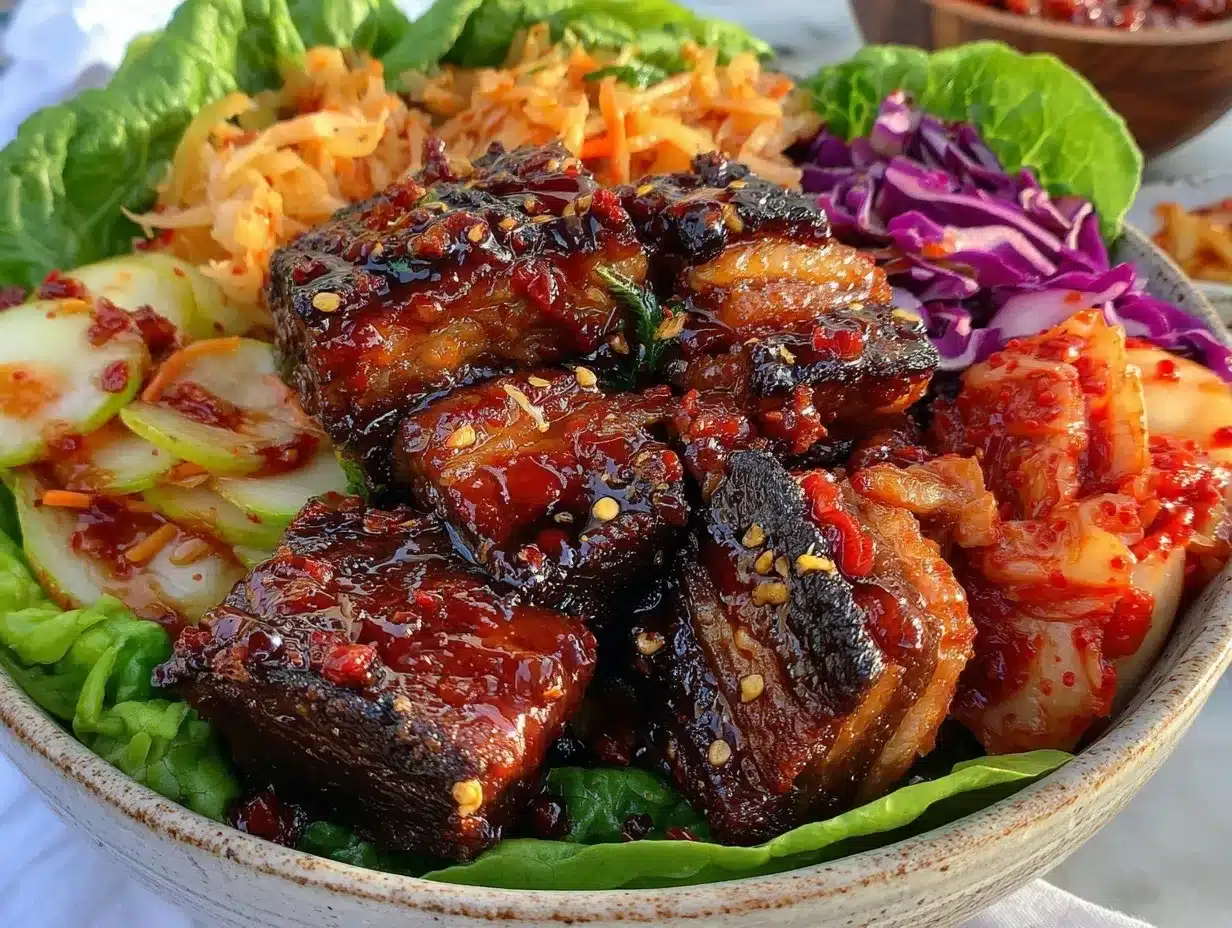
- Assemble the Ssam Bowl: In serving bowls, place a scoop of warm rice. Arrange the seared pork belly on top, add a few pieces of pickled daikon, a generous spoonful of kimchi, and fresh lettuce leaves on the side. Sprinkle with toasted sesame seeds and sliced green onions for that finishing touch.
- How to Eat: Grab a lettuce leaf, add a bit of pork, pickled daikon, kimchi, and rice, then wrap it up and enjoy the burst of flavors all at once. This hands-on experience makes it fun and interactive.
Pro tip: If your pork slices seem thick, give them a quick press with the spatula mid-cook to get better caramelization. Also, don’t rush the pickling step; even a brief pickle brightens the whole bowl.
Cooking Tips & Techniques
Getting that perfect balance in your gochujang pork belly ssam bowl can be tricky, but here are some pointers from my own kitchen trials:
- Slice Pork Belly Thinly: This helps the pork cook evenly and absorb the marinade better. If your pork is too thick, it might be chewy or unevenly cooked.
- Marinate Long Enough: Even 20 minutes makes a big difference. The pork soaks up the sweet-spicy notes and tenderizes.
- Don’t Overcrowd the Pan: Cooking pork in batches lets each piece caramelize instead of steaming. The Maillard reaction is your friend here.
- Quick Pickling is Key: The pickled daikon adds a crisp, acidic contrast that cuts through the pork’s richness. Don’t skip it, even if short on time.
- Multitask: While the pork marinates, start pickling and cooking rice to save time. I usually prep everything first, then cook in stages.
- Adjust Spice Level: Gochujang varies in heat; taste and add more or less according to your preference.
I’ve had moments where I left out the pickled daikon in a rush, and honestly, the bowl just felt flat. That tart crunch is what brings it alive. Also, burnt edges happen if the pan is too hot or pork slices are too thick—watch carefully!
Variations & Adaptations
If you want to customize this ssam bowl, here are a few ideas I’ve tried or thought through:
- Vegetarian Version: Swap pork belly with thick slices of grilled tofu marinated in the same gochujang sauce. Firm tofu holds up well and soaks up flavors nicely.
- Low-Carb Option: Replace rice with cauliflower rice or a bed of sautéed greens for a lighter bowl.
- Seasonal Twist: In spring and summer, swap pickled daikon for quick-pickled cucumber ribbons or fresh julienned carrots for a sweeter crunch.
- Spicy Level Tweak: For less heat, reduce gochujang or mix it with a bit of mild chili paste. For extra kick, add fresh sliced chili or a drizzle of chili oil on top.
- Alternative Wraps: Try using perilla leaves if you want a more authentic Korean taste with a slightly minty note.
One time, I tried adding a fried egg on top—total game changer for richness and texture. Feel free to experiment and make this recipe your own.
Serving & Storage Suggestions
This ssam bowl is best served warm, with freshly cooked rice and hot-off-the-pan pork belly. The contrast between warm pork and cool pickled daikon makes every bite exciting.
For presentation, arrange the pork and sides neatly in a shallow bowl or stoneware plate. Place the lettuce leaves on the side so everyone can build their own wraps. Sprinkle toasted sesame seeds and green onions last for a pop of color.
Leftovers can be stored in an airtight container in the fridge for up to 3 days. Keep the pork separate from the pickled daikon and kimchi to maintain their crispness. When reheating pork, warm it gently in a skillet to retain texture rather than microwaving straight away (microwaving tends to make pork chewy).
The flavors actually deepen after a day in the fridge, so if you can resist, next-day leftovers taste even better. Just reheat gently and assemble fresh.
Nutritional Information & Benefits
Each serving (approximate) of this gochujang pork belly ssam bowl packs about 550 calories, with 30g of protein, 20g of fat, and 50g of carbohydrates. The pork belly provides rich protein and fats, while the pickled daikon and kimchi contribute beneficial probiotics and vitamins.
Kimchi is known for its gut-friendly properties and antioxidants, and the pickled daikon adds vitamin C and digestive enzymes. Using gochujang adds a small dose of capsaicin, which may support metabolism.
This recipe can be made gluten-free by swapping soy sauce for tamari. It’s naturally dairy-free and can be adapted for low-carb or vegetarian diets as mentioned. Just be mindful that pork belly is higher in fat, so balance it with plenty of fresh veggies or lighter sides if preferred.
Conclusion
This flavorful gochujang pork belly ssam bowl is more than just a meal; it’s a small celebration of Korean flavors that you can make right at home. I love how it balances smoky, spicy, tangy, and fresh elements all in one bowl, and it never fails to impress friends who thought Korean food was complicated. Honestly, it’s a recipe that invites you to slow down and enjoy the little pleasures of building your own wrap, bite by bite.
Give it a try, tweak it to your taste, and don’t be shy about adding your personal touch. I’d love to hear how your version turns out—drop a comment or share your photos. Remember, cooking is about joy and discovery, so have fun with it!
Happy cooking and even happier eating!
FAQs
Can I use a different cut of pork instead of pork belly?
Yes, pork shoulder or pork loin can work, but they’ll have different textures and fat content. Pork belly is preferred for its rich, tender quality and caramelization.
How long can I keep the pickled daikon in the fridge?
Pickled daikon will keep well for up to two weeks in the refrigerator when stored in an airtight container.
Is gochujang very spicy? Can I reduce the heat?
Gochujang has a moderate heat level with a sweet, fermented flavor. You can reduce spice by using less or mixing it with a bit of honey or mild chili paste.
Can I prepare parts of this recipe ahead of time?
Absolutely! Marinate the pork and pickle the daikon a few hours ahead or even the day before. Cook the rice fresh for best texture.
What can I serve alongside this ssam bowl?
This pairs wonderfully with steamed vegetables, Korean side dishes like japchae, or a light cucumber salad to balance richness.
Pin This Recipe!

Flavorful Gochujang Pork Belly Ssam Bowl

A hearty and fresh Korean-inspired bowl featuring tender caramelized pork belly marinated in gochujang, paired with pickled daikon, kimchi, and fresh lettuce for wrapping. Perfect for fans of bold, spicy, and tangy flavors.
- Prep Time: 25 minutes
- Cook Time: 30 minutes
- Total Time: 55 minutes
- Yield: 4 servings 1x
- Category: Main Course
- Cuisine: Korean
Ingredients
- 1 lb (450g) pork belly, skin removed and sliced into ¼-inch strips
- 2 tbsp gochujang (Korean chili paste)
- 1 tbsp soy sauce (use gluten-free tamari if needed)
- 1 tbsp honey or brown sugar
- 1 tbsp toasted sesame oil
- 2 cloves garlic, minced
- 1 tsp grated ginger
- 1 tsp rice vinegar
- 1 cup daikon radish, peeled and julienned
- ½ cup rice vinegar
- ¼ cup sugar
- ½ tsp salt
- Pinch of red pepper flakes (optional)
- About 2 cups cooked short-grain rice
- ½ cup kimchi (store-bought or homemade)
- Fresh lettuce leaves (butter lettuce or green leaf)
- Toasted sesame seeds (for garnish)
- Thinly sliced green onions (for freshness)
Instructions
- In a medium bowl, combine 2 tbsp gochujang, 1 tbsp soy sauce, 1 tbsp honey, 1 tbsp toasted sesame oil, minced garlic, grated ginger, and 1 tsp rice vinegar. Whisk until smooth.
- Toss the sliced pork belly into the marinade, coating each piece evenly. Cover and refrigerate for at least 20 minutes (up to 2 hours).
- Prepare the quick pickle by combining ½ cup rice vinegar, ¼ cup sugar, and ½ tsp salt in a small saucepan. Heat over medium until sugar dissolves, then remove from heat and let cool slightly.
- Place julienned daikon in a jar or bowl and pour the pickling liquid over it. Add red pepper flakes if desired. Let sit at room temperature for about 30 minutes.
- Cook 2 cups of short-grain rice according to package instructions or stovetop method: rinse rice until water runs clear, combine with 2½ cups water, bring to boil, reduce heat to low, cover and simmer for 18 minutes, then steam covered off heat for 10 minutes.
- Heat a cast-iron skillet or heavy pan over medium-high heat. Add marinated pork slices in a single layer and sear for 2-3 minutes per side until caramelized and slightly crispy. Cook in batches if needed. Remove and set aside.
- Assemble the ssam bowl by placing a scoop of warm rice in serving bowls. Top with seared pork belly, pickled daikon, kimchi, and fresh lettuce leaves on the side.
- Sprinkle with toasted sesame seeds and sliced green onions.
- To eat, wrap pork, pickled daikon, kimchi, and rice in a lettuce leaf and enjoy.
Notes
Slice pork belly thinly for even cooking and better marinade absorption. Marinate at least 20 minutes for best flavor. Cook pork in batches to avoid steaming. Quick pickle the daikon for about 30 minutes to add refreshing crunch. Adjust gochujang spice level to taste. Reheat pork gently in a skillet to maintain texture. Leftovers keep well for up to 3 days refrigerated.
Nutrition
- Serving Size: 1 bowl (including po
- Calories: 550
- Fat: 20
- Carbohydrates: 50
- Protein: 30
Keywords: gochujang, pork belly, ssam bowl, Korean food, pickled daikon, kimchi, spicy, homemade, easy recipe